Showing posts with label interview. Show all posts
Thursday, August 29, 2019 | By: The Write Way Cafe

Meet Teresa Roman

The Write Way Café welcomes Teresa Roman, who explores tough topics of abuse, loss, and finding love in Second Chances.


When did you first have the thought you'd like to write a book?
About 6 or 7 years ago. I’m a big daydreamer and I get all these stories in my head. One day I just decided it would be fun to write them all down.

What was your path to getting Second Chances written and published? What type of research did you do?
The stories in my contemporary romance books are always a combination of personal experiences and my imagination. Because I draw from personal experience, I usually don’t have a ton of research to do. For Second Chances most of my research consisted of talking to people who had been through the loss of a spouse.

Where did the idea for your story come from?
There are so many stories out there about someone losing a spouse, how painful it is, and their road to finding love again. I wanted to explore what happened when the marriage wasn’t happy, when the grieving widow didn’t necessarily lose the “love of her life.”

Why did you pick the setting you did?
The story is set in Sacramento, CA where I currently live. It’s a great city so that’s why I decided to use it as a setting for my book.

Are your main characters completely imaginary or do they have some basis in real people? Do they reflect aspects of yourself?
They are a mix of my imagination and a mix of either myself or people I know. Choosing to write characters that reflects aspects of myself is very cathartic for me, but since the characters aren’t truly autobiographical I feel like I still retain some privacy.

Did you face any blocks while writing Second Chances, and if so, how did you handle them?
Second Chances was fairly easy to write because I had the story so fleshed out in my head.

What have been surprises you've encountered while writing Second Chances and after?
I’d say the biggest surprise I encountered was in a handful of reviews. It is a story about emotional abuse among other things. I was surprised at how judgmental some people can be about this topic. To be honest that made me a little sad. I don’t necessarily think it’s fair to judge others when you’ve never been in their place.

What did you learn? For instance, what did you learn about yourself, your process, the writing world; about being a single parent, and then blending families?
I learned that there are a million emotions involved with losing a spouse, falling in love again, blending families, etc. Now when I watch people go through similar circumstances, my heart really aches for them.

What aspect of writing gives you the most trouble?
Transitions. Going from one scene to another is always a challenge for me. The other is endings. I have a habit of rushing them.

Tell us about your writing space and how or why it works for you.
I mostly write on my couch, just because it’s more comfortable than sitting at a desk. I write when my kids are in school. When they’re around I get way too distracted.

What are some of your favorite books and why?
So many … I think my all-time favorite book series is the Arcana Chronicles by Kresley Cole. I also really love Harry Potter, The Count of Monte Cristo, The Book Thief, Me Before You. I could talk about my favorite books all day.

Who is your favorite hero/heroine?
That’s another hard one. There are so many good choices. I love Hermione, of course. I also really love Daenerys Targaryen from Game of Thrones (the books, not the show).

What are you working on now?
A paranormal romance series called The Cursed Prince.

Would you like to try your hand at writing a different genre?  Which one and why?
If I had the confidence, I’d really like to try historical romance. I’m so scared of getting some detail wrong that I’m too anxious to give it a try.

If you were not a writer, what would your dream job be?
Really anything that has to do with books like a librarian or editor. I just really love books - reading them, writing them, and talking about them.

###

by Teresa RomanWhen Vanessa’s tumultuous marriage ends with the unexpected death of her husband, she’s left battling a mix of emotions. Haunted by her husband’s final words, Vanessa must find the strength to keep it together for the sake of her two children. But being a widow and single mother isn’t easy.

As Vanessa starts to put the pieces of her life back together, she runs into an old high school friend. Alex convinces her to take a chance on love again, but the burden of her unresolved emotions and the challenges of blending two families take their toll, leaving Vanessa fearful that second chances aren’t for everyone.

Amazon


Teresa Roman writes contemporary and paranormal romance for adults and young adults. If it were possible to be born with a book in her hands, that’s how Teresa Roman would’ve entered this world. Her passion for reading is what inspired her to become a writer. She loves the way stories can take you to another time and place.

Born in Romania, Teresa has lived in the Midwest and on both coasts but currently calls Sacramento, California, her home. She lives there with her husband, three adorable children, three cats, and a dog. When she’s not at her day job or running around with her kids, you can find her in the kitchen baking something sinful, in front of the computer, writing, or with her head buried in another book.

Website        Facebook      Twitter         Goodreads        Instagram


Thursday, April 25, 2019 | By: The Write Way Cafe

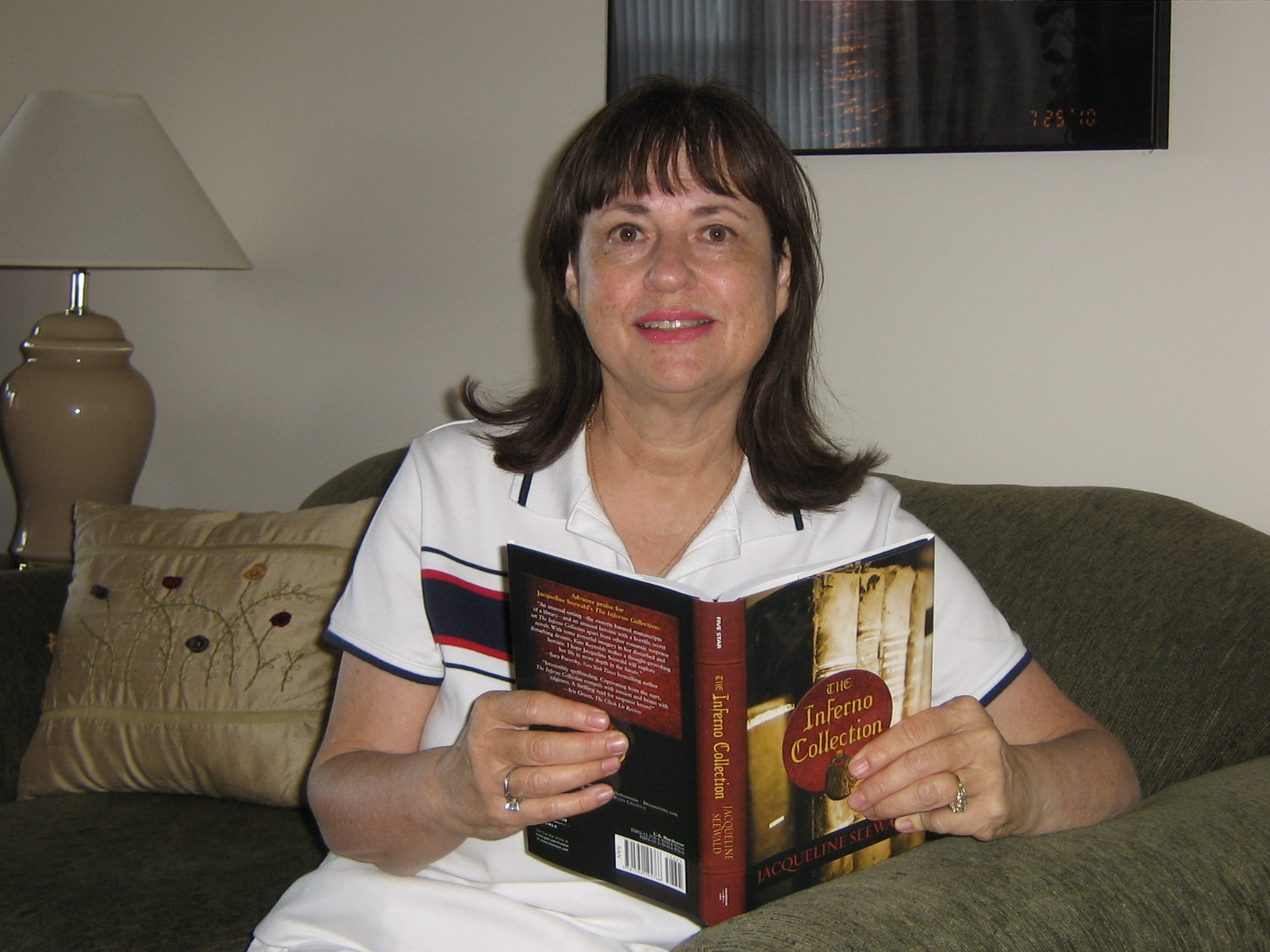
Writing Teen Fiction Today by Jacqueline Seewald

The Write Way Café welcomes Jacqueline Seewald, who offers tips for writing successfully for teens.

Even before J. K. Rowling's tremendous success with her Harry Potter series, publishers were frantically searching for fantasy and horror fiction for children and teenagers that they hoped would top the bestseller list. Imitation may be the sincerest form of flattery, but it does not insure success as a writer. Here are my suggestions:

Tip One: You don’t need to copy current market trends. (Honor bright!)

Teens have varied tastes in fiction. Not every teen or juvenile book needs to feature werewolves, vampires, witches, goblins, etc. Witness the huge success of such realistic teen novels as THE FAULT IN OUR STARS. Note that ALL THE LIGHT WE CANNOT SEE by Anthony Doerr which won the 2015 Pulitzer Prize for Fiction could easily be read and understood by teens as well as adults since the novel is suited to both. Here we have a book which is historical in nature. Teens are as curious about the past as they are about the present and the future.

Books set in the "real" world do have appeal for teenagers. Teens are not necessarily trying to read books that provide a total escape from reality. Even fantasy books need to be believable, providing an element of reality through character development to which readers can relate. In the crossover novel THE THIRD EYE: A PINE BARRENS MYSTERY, the real world is seen through the eyes of a teenage boy while his mother experiences it through an alternate reality. The paranormal elements in the novel are believable because the “real” world interacts with them.

Dystopian novels are still popular at the current time. But trends change rapidly. My advice, don't write for the market; write the story you need and want to write. We are all writers. We all have within us an important, wonderful story to share. Get in touch with your inner teen self. Strive for authenticity.

Tip Two: Develop a unique voice.

by Jacqueline SeewaldThis is one of the most important things in writing a successful young adult novel. This does not mean that you must write only from a first person point of view. However, teenage readers often respond well to a first person narrative. But ”voice” has to do with choice of vocabulary and style as well. In my YA novel, STACY’S SONG, the story is written in the first person from the main character’s point of view. Stacy has a sense of humor and a unique perspective.

Tip Three: Character identification is significant.

It is important to create a central character that young readers can both sympathize and identify with. Whether writing realistic or fantasy fiction, if the reader can't care about or relate to the main character, then he or she won't believe or accept what follows. A main character needs to be well-rounded, think and feel the way adolescents do.

Tip Four: Know teenagers.

If you are going to write about teens, you need to know them. Do some research. Besides raising two teenagers, I taught English and later Library Science. I taught at all levels: the university, high school, middle school and elementary. But most of my years were in the high school. I am accustomed to the way teenagers think, talk and behave. If you are not a teen yourself, talk to teenagers, read their magazines, watch their favorite TV programs, observe how they behave at malls, amusement parks, movie theaters etc. Listen to them.

Tip Five: Recall your own teenage memories.

by Jacqueline SeewaldDig deep into your psyche. How did you feel as a teenager? Were you confused about certain things? What made you happy? What troubled you? What are your most vivid memories of those times? Did you keep a diary or journal? If so, reread some of what you wrote.

My YA novel, THE DEVIL AND DANNA WEBSTER, published by Clean Reads in all e-book formats and print, is the story of a girl who has identity issues. She is also faced with peer pressure and conflicting values. Most of us have gone through similar problems as adolescents.

Tip Six: Get input from your own children.

Ask your teenagers to read your writing and critique it. Consider collaborating with your children on the writing of your fiction. I wrote WHERE IS ROBERT?, a YA mystery novel, with help from both of my sons who were teenagers at the time. Both boys contributed to the scenes of high school wrestling, since they both engaged in the sport. I couldn't have written the book without them. My son, Andrew, co-authored THE THIRD EYE: A PINE BARRENS MYSTERY published by Five Star/Gale/Cengage. He gave the teenage boy narrator an authentic “voice”.

Tip Seven: Make it dramatic.

Think like a cinematographer. Create vivid scenes. Dramatize your story. Don't just tell your story, show it. I'm certain you've heard that advice before! How to do this? Create meaningful, realistic dialogue for your characters. Each character should be an individual, talking in a certain distinct way to reflect a personal point of view, a unique way of thinking. Good dialogue leads to action and conflict between people with different viewpoints and goals.

Also, settings need to be described so that they seem real. In fact, there's nothing wrong with using real places for background setting. My five published YA’s are all set in Central New Jersey, an area very much like the one in which I lived and worked.

Tip Eight: Begin with an outline.

Outlines can be rough. They don’t need to be detailed. But you should have some idea about arranging the events of the plot line. This will be something to consult when writing your first draft with your key characters and scenes.

Tip Nine: When you develop your book, look for depth.

Although books for teens are usually shorter than those for adults, that doesn't mean they require less creative thought. Respect your readers; give them quality.

Tip Ten: Provide an element of mystery.

Teens as well as younger children enjoy a mystery. Every good work of fiction should have a plot that keeps the reader turning the pages, wanting to discover what is going to happen next. It's important to set up some sort of a question that can't be easily or immediately answered, a secret of the human heart that must be delved into.

Tip Eleven: Develop key themes in your YA fiction.

Teen novels are generally about coming-of-age, of finding personal identity, making sense of the
adult world, relating to it and fitting into it—or not.

by Jacqueline Seewald My latest YA novel is WITCH WISH. Val Williams believes she will never be as pretty or popular as her older sister Ailene. When Ailene dumps her on an unfamiliar road after an argument, Val decides to ask directions of the only person she sees, an old woman engaged in a garage sale. Val purchases a music box which the old woman claims has magical qualities and will grant Val one wish. Val wishes that that her sister would stop being so perfect but soon comes to regret her wish.

https://blackopalbooks.com/witch-wish/

https://www.amazon.com/dp/B07DRB3VVH

The success of J.K. Rowling’s books gave new hope and inspiration to those of us who write juvenile fiction. No longer could we gripe that children and young adults do not read. If nothing else, the reception the Potter books received proves that there is an audience for fiction among young people. Also, such books if well-written have a strong appeal for adult readers as well—think of THE HUNGER GAMES, DIVERGENT or the TWILIGHT series.

Your comments, suggestions and input welcome here!

About Jacqueline Seewald:   

Multiple award-winning author, Jacqueline Seewald, has taught creative, expository and technical writing at Rutgers University as well as high school English. She also worked as both an academic librarian and an educational media specialist. Nineteen of her books of fiction have been published to critical praise including books for adults, teens and children. Her most recent novels are DEATH PROMISE and WITCH WISH. Her short stories, poems, essays, reviews and articles have appeared in hundreds of diverse publications and numerous anthologies such as: THE WRITER, L.A. TIMES, READER’S DIGEST, PEDESTAL, SHERLOCK HOLMES MYSTERY MAGAZINE, OVER MY DEAD BODY!, GUMSHOE REVIEW, LIBRARY JOURNAL, PUBLISHERS WEEKLY and THE CHRISTIAN SCIENCE MONITOR. She enjoys painting landscapes and singing along to all kinds of music. Her writer’s blog can be found at: http://jacquelineseewald.blogspot.com.

Thursday, January 31, 2019 | By: The Write Way Cafe

Dawn Baca Explores Family Themes

The Write Way Café welcomes Dawn Baca, who enjoys the adventure of living and exploring themes of family in her writing.


Tell us a little about your Letting Love In series.
     This whole adventure started as a single story that morphed into a series about a young woman with four sisters, a controlling mother, and all the family drama one could imagine.
     Each of the five sisters will have their own novel and their own love story, with novella length, spin-off stories of key people in the series. The first book in the Letting Love In series, Her Guarded Heart, tells the story of Addison’s experience in Russia where, while studying abroad, she falls in love.
     The second book, Her Heart’s Desire is a spin-off novella and tells part one of the story of Sophie, the French roommate Addison had in book one. Right now, I’m writing the second part of Sophie’s story, another novella.
     The series itself will follow Addison as she struggles to find balance in her life, and wade through the muck of a dysfunctional family, meeting new people, and having adventures. It’s full of characters and situations that many readers will find (wholly, absolutely, entertainingly) relatable. Partly completely fictional and partly a compilation of my friends and families various experiences.

If Her Guarded Heart and Her Heart’s Desire were made into movies, who would play your main characters, and why?

Addison – Mandy Moore:  Mandy’s got that down to earth girl next door feel to her while being beautiful without it being all you notice about her.

Sergei – Eric Bana:  Eric sports those exotic good looks and easy-going demeanor which reminds me of how easy it is to fall in love with a smile.

Sophie – Natalie Portman:  Natalie is full of fun and laughter and innocence all rolled into a spitfire personality that gets things done

Claude – Scott Eastwood:  Scott’s rugged good looks give you the impression that he would easily get down in the trenches and get his hands dirty which is perfect for a man on a horse farm.

What or who has been instrumental in or to your writing journey?
     I have met dozens of writers over the last few years, and their constant support has helped push me forward even when I didn’t think I had what it took. I would never have even started this journey without the encouragement and initial help from my darling friend Deb Julienne. Not only did I learn so much from her, but we also learned a lot of new things together. Another author, Casey Hagen, has become one of my greatest friends. Her critiques are always spot on and I treasure our friendship.

What’s the best writing advice you’ve been given? What’s your best writing advice for others?
     The best advice given so far is to tell the story the best way you know how. It can always be edited into shape later, so get those words down, and even the best of writers need to be edited, so never skip that step. The second piece is to establish a solid social media platform under your author name long before you publish so that you can build relationships that are not all about pushing your book.
     My advice to others is to write at least three complete books before you even try to publish. The practice will make you a stronger writer, and the experience will prepare you better for the fast pace of the business. Also, take the advice of other authors, both established and those that are in the same place as you. You can always learn and grow from another’s experiences.

What “keepers” are in your home library?
     My home library contains an eclectic array of: JK Rowling (Harry Potter Series), Elizabeth Peters (Amelia Peabody Series), Mary Higgins Clark, Nora Roberts (The key Series, the Irish Sisters Trilogy), Julia Garwood, Kay Hooper (Bishop Series), and Iris Johansen (The Eve Duncan Series) at the moment. Additionally, about two dozen stand-alone romance novels I picked up at the last RWA Conference. Last year I donated a couple hundred Harlequins that I’d had since high school. Since I read diverse genre’s, my tastes are constantly changing, and so are the books on my shelves.

If you could be a character in any book you’ve read (or written), which character would you be and why?
     I would have to pick the Nora Roberts Born In Trilogy. My father was a huge fan and sent me the books. He often said that the main characters reminded him of his three daughters. I often thought that I was similar to Maggie the firstborn, torn by duty and the desire for independence, an often fiery temper, and sharp tongue, and stubborn as only the Irish can be and laughing all the way, my father agreed.

Characters often find themselves in situations they aren’t sure they can get themselves out of. When was the last time you found yourself in a situation that was hard to get out of and what did you do?
     Oddly enough, I find myself in one of those currently. Every year the hubs take a ‘guys' camping trip. Mind you its not just all guys, some of them take their wives too but, to me, it’s always been a week-long trip, with 40 to 60-year-old men behaving like 12-year olds playing at a college frat party drunk fest, ‘guys’ trip. I usually pass on that experience. This time around, one of our dear friends is bringing his wife and she really wants me to go as well… Again, a bunch of mostly guys sitting around getting rip-roaring drunk for a week out in the desert in early February is not my idea of fun. But it seems I have been outvoted and volun-told that I am going along this year and should be getting ready as well. I can think of a half dozen reasons to bow out. Have tried voicing about half of them come to think of it. However, the guilt trip/peer pressure is wearing me down. I have just about accepted that this is going to happen. Still, I resist. So… how to make the best of the situation… If I am honest, I am currently threatening to find a way to induce food poisoning upon my unsuspecting but thoroughly insistent traveling companions so as to not be invited back next year, lol. (I’m joking.)

What has been the toughest criticism given to you as an author? What has been the best compliment?
     Criticism – Many of my initial critique partners often told me that what I write is too personal and dry, and I need to make it less real and more fictional in order to make the story more interesting to read.
     Compliment – A friend I’d lost touch with when we stopped working together more than a decade ago reached out after I published my first book to tell me she loved it. We reconnected and she’s been a great support ever since. She said that I wrote like Robyn Carr and that she had no doubt that, in time I’d become someone else’s new favorite author.

We’re adding books to our Café menu. Would your book be a drink, an appetizer, an entrée, or a dessert? What would you call it?
     I would have to go with an appetizer. Specifically, Crepes filled with melted Brie, and a fruity jam sauce, and I’d name it Decadence.

What is your favorite social media? Why?
     I think Facebook gets that dubious honor. I find it’s a great way to easily connect with so many different types of people, and I’ve reconnected with many long lost friends because of it as well. Also, I won’t lie… I love the cat videos. Having five cats of my own, I’m never far from their constant shenanigans.


And now for the fun stuff!

If you were a hashtag, what would you be?
     #CrazyCatLady – being allergic to cats and dogs now, and having allergy-induced asthma, the doctors and my friends all think I’m certifiable to have so many cats inside. (I can’t help myself)

What is your biggest shopping downfall?
     I’m not a big shopper; in fact, do most of my shopping online now. But when I do buy things that are all about me, it’s usually shoes, wine, and books… in that order.

Are you a dog/cat/other person?
     I’m both. I’ve had 3 dogs, and 8 cats so far. (Currently 5 indoor cats, 1 outdoor cat, 0 dogs) Trying to convince the hubs we need another dog, but he’s still trying to get over the loss of both of our Labs last year…

What is your favorite season and why?
     My favorite season is Fall. It’s the most comfortable here in Central California. The warmth of Summer starts to taper off but the freezing (for me anything under 65 is freezing) hasn’t started yet.

If you had to write with a pen instead of a computer, what type of pen would be your preference?
     I love Blue ink I think its prettier on the page. It’s a weird thing, but I don’t like to write in black ink. I like the gel rollerballs the best because they seem the smoothest to glide across the paper and as a lefty; I tend to press down hard.


Her Guarded Heart


Her Hearts Desire


About Dawn:  An insatiable reader of all genres since her childhood, Dawn is a globetrotter hungry to discover new places and experience unique adventures. She can be found indulging in her husband’s first love of summer camping in the mountains or luxuriating on the open seas while cruising to exotic destinations during the frigid winter months. When she’s not jet-setting she can be found in Central Valley California with her family and their many rescue animals.

Website         Facebook         Twitter             YouTube

Pinterest          Bookbub         Amazon
Thursday, January 24, 2019 | By: The Write Way Cafe

The Heart of Aleppo by Ammar Habbib

The Write Way Café welcomes Ammar Habbib, an award-winning, best selling author who tackles serious topics with positive messages.

Tell us a little about The Heart of Aleppo: A Story of the Syrian Civil War.
Thank you for the interview! As the title suggests, this novel is set in the midst of the current Syrian Civil War. It follows a 13-year-old boy (Zaid Kadir) who is trapped in the city of Aleppo after it becomes a warzone. The book encompasses themes of humanity’s strength during the darkest times. The novel is definitely not politically powered, as it focuses more on the human aspect of the tragedies occurring in Syria. It’s told from the perspective of the young protagonist, which I think gives an extra layer of development to the story. Although the main character is fictional, everything that he sees and experiences in the novel is based on true events. It has done extremely well since its release in July 2018 in terms of its reception.

If The Heart of Aleppo was made into a movie, who would play your main characters, and why?
For this question, I honestly don’t have an answer. I am not very familiar with many Arabian actors who fall under the age of the main characters (who are all teenagers), so I’m not sure which actors/actresses I would pick.

Who is your intended audience and why should they read your book?
I think most readers would enjoy this book due to the contemporary topic, but it was written with the young adult audience in mind. However, I have gotten a lot of feedback from readers of all ages about the novel. I think that because of its relevant subject, most readers would connect with the story.

How did you become involved with the subject or theme of your book?
I’ve been keeping up with the Syrian Civil War since it began several years ago. Hearing all the first-hand accounts, I wanted to write a work that would do justice to those who have been hurt or affected by the war. However, I wanted to keep the novel true to the people suffering from the war and keep the focus on them, not politics. That’s really how the idea for this novel began.

Who is your favorite character from your book and why?
My favorite character is the protagonist, Zaid Kadir. He’s a 13-year-old boy, and this book is very much his “coming-of-age” story. His character is very much based on me when I was a child, everything from his personality, physique, and internal thoughts. For that reason, I think I connected with him in a way I haven’t connected with any of my previous protagonists.

Tell us a little bit about your cover art. Who designed it? Why did you go with that particular image/artwork?
The artwork was created by my friend, Fiona Jayde. She is a freelance book cover designer who I’ve worked with for nearly all my projects. What I loved about this book cover is that it shows the themes of the novel. It displays the destruction that we see in the story. The burnt up soccer ball symbolizes that lost innocence of the protagonist, Zaid, as he journeys through the wrecked city. And the lighting effect where a small stream of bright light breaks the darkness shows the theme of how hope never dies as long as we hold onto it.

Give us an interesting fun fact or a few about your book or series.
One fact about this book is that it is very accurate to the events of 2012’s Battle of Aleppo. Everything that Zaid is faced with and witnesses is true-to-life. I wanted this work to show war from the perspective of a refugee, and I did a lot of research to keep the timeline of events accurate to what really happened. I think this all adds a layer of realism to the story that it would not have otherwise had.

If you had to choose, which writer would you consider a mentor?
That’s a great question. I don’t have a mentor when it comes to my writing as of now. However, if I ever had the chance, I would love to learn from one of my favorite authors, John Grisham. I’ve always enjoyed his books, and I would love to pick his brain about storytelling.

Do you have any unique talents or hobbies?
Outside of writing, my unique talents would be my ability to daydream in any situation!

Do you have any tips for readers or advice for other writers trying to get published?
I’ve learned a lot about the industry over the past few years. What I’ve seen is that along with filmmaking, it is probably the most subjective industry out there. A writer may spend months perfecting their story, putting their heart and soul into it, staying up the whole night working on it, only for an editor to reject it with a short sentence of vague reasoning. That’s what can make the industry very frustrating.
     What I tell people who ask is that you need to write something that you believe in. Don’t worry about what others think about it. If you think it’s a great story and one that needs to be told, then write it! The other thing is that writers need to have thick skin. Editors and agents reject hundreds of works a day and critics give bad reviews all the time, so never take it personal. But if you believe in your work and did your best, then never let the opinions of anyone tear you down. Write stories that you’d want to read, regardless of what others say!

What can readers who enjoy your book do to help make it successful?
The biggest thing readers can do to help out an author is to leave a review after they read the work. Whether it’s a positive, neutral, or negative review, reviews left on Amazon, Goodreads, or personal blogs all help generate visibility for an author’s work!!

What can we expect from you in the future?
I’m currently working on 3 new projects (2 fiction and 1 narrative nonfiction). I don’t have release dates or official titles for any of them yet, but I hope to release at least one more novel in 2019!


by Ammar Habbib
After standing for over 7,000 years, Aleppo's ruin came overnight.

Separated from his family during the night the rebels attacked the city, thirteen-year-old Zaid Kadir is lost in the middle of a war zone. Alongside his friends, he is forced to survive the dangers of a civil war he does not even fully understand. Zaid witnesses the destruction of the brutal Syrian Civil War as it grows more deadly by the day and rips his city apart. However, as he braves this destruction, as he desperately tries to survive this catastrophe, he discovers something. Zaid realizes that it is in the darkest hours when humanity's spirit of hope burns brightest.

Amazon

Ammar Habbib is an award-winning & bestselling author originally from Lake Jackson, Texas. Writing has always been a passion of Ammar’s since he was in elementary school. Ammar enjoys crafting stories that are not only entertaining, but also have something useful to say to the reader. Ammar presently resides in his hometown. He lives with his family, all of whom are his biggest fans. To learn more about Ammar, please visit his official author website at: www.ammarahsenhabib.com

Website          Facebook          Twitter

Goodreads          Instagram
Thursday, February 8, 2018 | By: The Write Way Cafe

Getting to Know Sally Meadows

The Write Way Café welcomes Sally Meadows, author of the children's book, The Two Trees, which draws on her life experiences and her passions.

When did you first have the thought you'd like to write a book? 
I have always wanted to write, from when I was a little girl. I have been fortunate that of the careers I have had—including scientific editor and educator—there has been plenty of opportunities to work with words. But it was when I was working with northern Saskatchewan schools and students ten years ago that I first had a burning desire to write a children’s book. The idea for that book was based on a project our office was supporting—the building of an energy efficient home that combined traditional Metis building materials and techniques with the latest green technology. I am still debating about writing that book, because it showcases the strengths of a demographic—Aboriginal youth—that is both overlooked and underrepresented in children’s stories.

What was your path to getting this book written and published? What type of research did you do?
About six years ago I took a course from award-winning YA/children’s author Alice Kuipers about writing a children’s picture book. After tossing around a few ideas (including the one above), I decided to write a story about a boy on the autism spectrum as told from the younger sibling’s perspective. I felt very encouraged by my classmates and instructor, and decided to look into publishing the story. It took a few years, but my first children’s picture book The Two Trees was finally published in April 2015. I wanted to publish the book quickly so I could earn additional income doing school presentations. So I decided to go with a blended publisher that functions somewhere between a royalty publisher and indie publishing.

Where did the idea for your story come from? 
I am a former teacher and am familiar with the challenges of children on the autism spectrum, ranging from those who have multiple disabilities and cognitive challenges, to highly functional and/or gifted. I also happen to be a parent of the latter. One day I was staring out the window, upset with the bullying that was happening to my son. I saw that one of the two trees my children planted when they were little was struggling to survive. The contrast between the growths of the two trees became the metaphorical foundation of my story The Two Trees.

Why did you pick the setting you did?
The story begins with the planting of the two trees in the backyard. Much of the action in the story happens here, so we as readers can visually assess the progress, and contrast the growths, of the two trees in parallel with the child with autism struggling to find a place where he can flourish. Other scenes occur within the home and at school, two common places a child can be encouraged and nurtured—or not.

Are your main characters completely imaginary or do they have some basis in real people? Do they reflect aspects of yourself?
The Two Trees is very loosely based on my family’s experience having a child with high-functioning autism in the home. However, there are fundamental differences in personality and ability of the two main characters—Jaxon, who tells the story, and his older brother Syd, who has autism—from any real-life individuals. While there are a few scenes in the book that actually happened—such as the bullying event at school—the majority of the scenes, and the minor characters, were partially or entirely fabricated to serve the narrative of the story. Of course, the two trees, which I consider as important characters in the book, are real. (By the way, they are both thriving and now very tall.)

Did you face any blocks while writing the book, and if so, how did you handle them? 
It was almost two years between finishing the manuscript and starting the process of getting the book published. I had a lot going on during that time, both personally and professionally, and I had to put the manuscript aside for a good year. Further, it had always bothered me that there wasn’t a well-defined critical turning point or climax in my original manuscript. Then one day, one of my children said something to me, and everything clicked into place. Many people now tell me that the scene I added was the one that impacted them the most: when Jaxon says, “I’m tired of being the older younger brother!”

What have been surprises you've encountered while writing the book and after?
Originally my intent was to write a book that might help alert parents that their quirky child might in fact have high-functioning autism, which can be disguised by giftedness. An early diagnosis is always better for the child. Mostly, though, the book has been an excellent tool in introducing school children to what autism is and what they can do to help, including being accepting of, and kind to, others who may be perceived as “different.”

What did you learn? For instance, what did you learn about yourself, your process, the writing world; about children with autism.
After The Two Trees was considered for two awards (The Word Awards (Canada, 2016)) and the Dolly Gray Children’s Literature Award (US, 2015) I felt affirmation that I was on the right path for this season of my life. I write about things that are important to me—my faith, autism awareness, positive stories about Aboriginal students, and connecting to the natural world. Although I wouldn’t call myself housebound—I am out doing school presentations, teaching workshops, and doing music at least some of the time—there are long periods when I feel quite isolated. I don’t mind being alone, but I didn’t expect to miss the social aspect of working outside the home so much! Now I make a concerted effort to build in social time—usually with other writers or musicians! And by the way, the absolute best moments for me as an author are at public events when I meet a child with autism—or their sibling, or friend—who connects with my story.

Tell us about your writing space and how or why it works for you.
I work from my home and during the day, no one else is around. So I take my computer out of my office area into my big, bright kitchen, and work from there. I love looking out into my tree-filled backyard, where I see lots of birds and the occasional bunny, all year round. It has in part inspired me to focus over the next two years on children’s books about wildlife.

What are some of your favorite books and why?
I am a life-long learner, so I read lots of non-fiction books, usually with topics related to writing, marketing, crafts, health, and faith. I am never without my bible. I also read all kinds of children’s books, which help me discover what I like and don’t like to help inform my own writing. Finally, I read a lot of novels—mostly Christian, and in a wide variety of genres. So just as I am diversified in what I do, I also am diversified in what I read!

What are you working on now?
I am currently working on two children’s picture book manuscripts and a middle-years manuscript. All have to do either directly or indirectly with wildlife. I am very, very excited where my career is going over the next year or two. I am also doing a lot of song writing in the first quarter of 2018.  I am really looking forward to getting back into the studio after the success of my most recent radio single “Holy Spirit.”

Would you like to try your hand at writing a different genre?  Which one and why?
My picture books tend to have a serious tone to them, so I would love to write a quirky, fun, imaginative children’s book. Also, although I have never aspired before to write a novel, that is starting to change. After reading some lovely Christmas novellas over the last two holiday seasons, I am inspired to try my hand at something similar.

If you were not a writer, what would your dream job be?
I am blessed to have had several wonderful careers over my lifetime, each of which was perfect at the time. My dream job is to do what I am doing now, but with more interaction with live humans! More income would be nice LOL. I’ve always wanted to work at a kid’s museum. I definitely see all my strengths coming together in a position there.

What aspect of writing gives you the most trouble?
Too many ideas and not enough time! I could work all day and all night! But I don’t, to keep balance in my life. Also, while I enjoy marketing, I find it can very easily eat up my time; I am truly happiest when I am actually creating. Finally, as mentioned above, I find the lack of human interaction during most of my days challenging. But that’s an easy fix, right?

Thanks so much for interviewing me!


by Sally MeadowsJaxon loves his big brother, but why can't he be like other kids? A poignant story about autism spectrum disorder as told from the perspective of the younger sibling.

The Two Trees Facebook page is: https://www.facebook.com/thetwotrees

The Two Trees can be purchased at https://sallymeadows.com/store, Amazon or at Amazon Canada.


About Sally:  
     Sally Meadows is an award-winning, multi-award-nominated author, recording artist, and speaker from Saskatoon, Saskatchewan, Canada. Sally writes children's picture books, short stories for adults, informational articles, and inspirational songs. Her work has been shortlisted four times for The Word Awards, Canada's largest and most prestigious awards for Christian writers. Her children's picture book The Two Trees was also considered for the 2015 Dolly Gray Children's Literature Award. Sally is also passionate about photography, incorporating many of her photos into videos and a range of retail products including greeting cards and calendars.
     Sally travels all around her home province (and beyond) speaking to elementary school children about autism and the importance of being a good friend in support of her book The Two Trees (see Speaking page). She passionately supports families that include a child on the autism spectrum.
     Sally also delivers hands-on workshops to adults in various topics related to writing and songwriting (see Speaking page).

http://sallymeadows.com
https://www.facebook.com/SallyMeadowsMusic


Thursday, October 5, 2017 | By: The Write Way Cafe

Meet Tina Newcomb

The Write Way Café welcomes Tina Newcomb, who used a terrifying experience to fuel writing.

When did you first have the thought you'd like to write a book? Was that first thought related to writing romance?
     I first started writing in the fourth grade. My teacher prompted and then rewarded us for trying. I took some college courses, but didn’t write again until I was in my late twenties. My first manuscript resides in a box in the closet.  No, my first thoughts weren’t related to romance. More to just telling a story.

What was your path to getting this book written and published? What type of research did you do?
     This story started out in Finding Eden, Book 1 of my Eden Falls Series. An editor suggested Carolyn’s story (A Taste of Eden, Book 3) become a book of its own. That was four years ago. I write sweet romance, which wasn’t selling very well at that time, so I decided to self-publish the whole series.
     Not being familiar with domestic abuse, I did quite a bit of research on the subject, mostly internet articles and statistics.

Where did the idea for your story come from?
     When I was in my early thirties, a man I worked with stalked me. I remembered the feeling of terror, of feeling trapped. The experience was far below what my heroine goes through, so I ramped up the feelings and emotions for her.

Why did you pick the setting you did?
     I get my inspiration from traveling with my husband. We took a trip through Washington a few years ago and the story was born. My setting comes before my characters.

Are your main characters completely imaginary or do they have some basis in real people? Do they reflect aspects of yourself?
     I think of my characters are completely imaginary, but, just last night, my stepdaughter (reading Finding Eden) texted a passage with the comment, “This is you! I love reading about you in your books!”
     The characters in this story are completely imaginary—except for Carolyn’s blush. If I could change that about me I would. I hate to blush.

Did you face any blocks while writing the book, and if so, how did you handle them? If not, what's your secret?

     Luckily, I haven’t suffered from writer’s block. Yet. If I get stumped on a character or a conflict, I step away, work on something else for a day or two, read a book, look for inspiration outside my writing space, talk to my husband. Watching television can even spark inspiration.

What have been surprises you've encountered while writing the book and after?
     I can’t think of any surprises I’ve encountered.

What did you learn? For instance, what did you learn about yourself, your process, the writing world; about being a chef and about abusive spouses?
     The biggest thing I’ve learned is that I can write a book/books if I put my mind to it. I’m editing Book 5 in the series. I’m a huge fan of NaNoWriMo. I’ve participated two years and finished two books. I’ve also learned to (sorta) navigate the self-publishing world. I didn’t do a lot of research on being a chef, since I don’t dwell on that subject much, but I learned more than I wanted to know about domestic abuse, what keeps people in the situation, and how frustrating it is for police officers.

Tell us about your writing space and how or why it works for you.
     I have an office I rarely use. Since I write on a laptop, my writing space can be anywhere, but I prefer the bed. I’m not one to write in my pajamas. I might not do my hair and makeup, but I do get dressed. My biggest interruption is a retired husband who doesn’t think he’s an interruption.

What are some of your favorite books and why?
     Dancing on Broken Glass by Ka Hancock, The Language of Flowers by Vanessa Diffenbaugh, The Perfect Son by Barbara Claypool White, and Sweet Salt Air by Barbara Delinsky are four of my favorites. I love to laugh so I read Susan Elizabeth Phillips and Kristan Higgins. They both put their characters in the most unique situations. I wish I could write funny.
     I also love to read anything by Karen White, Barbara O’Neal, and Sarah Addison Allen. LaVyrle Spencer inspired me to become a writer.

What are you working on now?
     I’m editing Touches of Eden (Book 5 in the Eden Falls Series). I’m aiming for a January release.

Would you like to try your hand at writing a different genre?  Which one and why?
     I’m working on a Women’s Fiction novel that I hope to publish traditionally. I love to read Women’s Fiction, but I’m not sure I can write it yet.  We’ll see…

If you were not a writer, what would your dream job be?
     Country singing superstar!

What aspect of writing gives you the most trouble?
     Conflict. I don’t like it in life, so I have a hard time coming up with believable conflict.

Who is your favorite hero/heroine?
     Heroine - Sugar Beth Carey from Susan Elizabeth Phillips Ain’t She Sweet.
     Hero – Beam Garrett from my own Beyond Eden.


An Eden Falls NovelWelcome to Eden Falls, Washington, where smiles are frequent and a helping hand is always near.

     Best-selling author Colton McCreed flies into remote but charming Eden Falls for the summer to study small town life for his next horrific murder mystery. As his research pulls him into the community, his life becomes entwined with Mayor Alex Blackwood and her exuberant son. Colton’s bitter past left him believing he’s immune to love, but he soon finds himself drawn to Alex and her happy-go-lucky kid. 
     Alex Blackwood is not only the mayor of Eden Falls, she’s a business owner, the mother of six-year-old Charlie, and a widow. While love for her son fills her soul, the crushing reality of the death of her husband, who was killed while serving his country, is always near. As she struggles to find balance between her busy life and the challenge of raising a young son on her own, dating someone who’s leaving at the end of summer runs dead last on her to-do list.
     Charlie’s impromptu invitations to dinner throw Colton and Alex into a world of discovery, shattering her image of Mr. Right and his belief forever happiness is out of reach.
     Colton must move past his fear of attachment or risk losing his opportunity at love.

eBooks:  Kindle      iBook     Nook      Kobo


Paperback:  Amazon


About Tina:  I was born and raised in Utah on the foothills of the spectacular Wasatch Front, where life as a kid was magical. Summers were spent hiking or swimming in the neighborhood pool, winters were for sledding down mountain hills.
     I acquired my love of reading from my parents. My mother was a librarian and stacks of books were always close at hand. I wrote my first (more than three page) story in fourth grade. Tobie, my heroine, bravely solved The Mystery Behind the Iron Door. I took writing classes in college and stories began to develop.
     I write happily-ever-after stories about real people going through the trials and tribulations of life. 
     I love my job, from blank page to the “ah-ha!” moments when a story comes together. 
     I live in Northern Colorado with my husband five of our eight children, and one of three grandchildren.

Facebook      Twitter      Pinterest      Goodreads


Thursday, September 21, 2017 | By: The Write Way Cafe

Meet Tamara Eaton

The Write Way Café welcomes Tamara Eaton, who started with 'what if' and ended with Weeping Women Springs.

When did you first have the thought you'd like to write a book? Was that first thought related to writing romance?
I started writing a Nancy Drew take-off in sixth grade. We’d call it fan-fic now. So I thought about writing a book early on. In high school, I thought I’d write a romance novel and figured I’d have it written by the time I was 25. Well, that ended up being put on hold for a long time. When I finally returned to writing I didn’t write in the romance genre.

What was your path to getting this book written and published? What type of research did you do?
My path was a long one for this first book. This story had been on my mind since college, but I was 47 when I sat down to write for National Novel Writing Month and on November 1 needed a story idea so that old idea came to me and I started to write. That first draft I didn’t do much research, just wrote a story. After I finished that draft I did the research. In historical fiction, I find that research often becomes a rabbit hole that once you start you end up lost for hours if not days. For me, I try not to get too lost in specifics, but I want it to sound authentic and I am careful to get the facts right of things outside my fictional world. Most of my research was online, though I’m fortunate enough to live with a WWII history buff who gave me lots of ideas. He makes documentary films and we’ve interviewed a lot of WWII vets as well as some of the women who either served or worked in the war factories. That became helpful background.

Where did the idea for your story come from?
As I mentioned the story was one I had in college. I imagined this town filled with women who had hidden themselves away from the world. It all starts with what if—and then I needed to figure out why they would do this and Weeping Women Springs was born. I think I needed a lot more maturity to write the story it eventually became.

Why did you pick the setting you did?
Weeping Women Springs is set in New Mexico and I chose that place because I needed somewhere isolated. Originally the village was set in Arizona, but for a variety of reasons I switched it to New Mexico, primarily because I’d lived in NM for quite a few years and loved the state.

Are your main characters completely imaginary or do they have some basis in real people? Do they reflect aspects of yourself?
My characters are completely fictional except for a few minor ones except for names. I’ve borrowed names from various people in my life. Maxine Fiekens was a sweet neighbor in SD and her daughter Peggy, the postmistress of the village we spend our summers in. So I borrowed Maxine’s name and Peggy’s name and put them in Hope Springs. Peggy has the same profession she had when I met her, running the post office. All characters are parts of me I suppose, at least things I’ve seen people do or imagine them doing.

Did you face any blocks while writing the book, and if so, how did you handle them? If not, what's your secret?
Since I edit for other people, my blocks usually come from outside sources. It’s easy to let their stories come before mine. However, on the writing front, I faced a couple obstacles in getting the story right. For example, when I started I knew little of Point of View and why you should stick with one character. I also had all kinds of characters in there telling their stories, so I had to whittle it down to five main characters.

What have been surprises you've encountered while writing the book and after?
I think the biggest surprise was how little I knew about writing a story, even after being a lifelong reader and had written stories before. When I set out to put something down, there were so many details I didn’t know and had to learn. I’ve learned since there is no right or wrong way to do it, but sometimes we get lost in the process and guidelines and I had to figure out what worked for me and my story.

What did you learn? For instance, what did you learn about yourself, your process, the writing world; about the effects of World War II and the Korean Conflict on women left behind?
I rather answered this question for the last one, but the primary lesson I learned was about grief and moving on—and I took this to the extremes where each character represented a different aspect(s) of the grieving process. I learned a lot about individual events of the war, mainly as they fitted in with my timeline I’d look for an event which happened in the war at that time and that led me to different battles which we don’t necessarily hear about, such as Attu in Alaska.

What are some of your favorite books and why? 
One of my favorite authors is Barbara Kingsolver. I loved The Poisonwood Bible and The Lacuna. Both of these stories had some influence on my book’s structure.

What are you working on now?
Currently, I’m attempting to finish up my second novel set against the backdrop of a coal mining disaster in 1913 Dawson, New Mexico, the second deadliest mining disaster in US history. The bulk of the story takes place over one night when three women bond while waiting for news of their husbands. It’s called The Waiting Shadows, and has been well-received by those who have read parts of it. I still have a couple more scenes to write and a thorough revision to go through. I’ve been working on this one for two years, and hope to have it done in the spring.

Would you like to try your hand at writing a different genre?  Which one and why?
Actually the idea I have for my next book will be in a different genre. I imagine it being a bit of a suspense/thriller type story and set more in the present than I’ve written before though the roots of the story are in the late 60s.

What aspect of writing gives you the most trouble?
I’m a terrible procrastinator for my own stories. I do great if I have a deadline, but left to my own devices, I put off making time for it. My goal is to become more disciplined and make sure I work on my own stories every day.

Thank you for having me!


Hope Springs has a secret–the waters mysteriously uplift the spirits of whoever drinks them. When the town’s young men depart to fight in WWII, tragedy strikes. Grief dilutes the waters unique effects, and hiding the village away from the world may provide shelter from the pain—but at what cost? Preoccupied with honoring their loved ones’ memories, five shattered women struggle to gather strength to overcome their loss, and find hope again.

Amazon

Tamara Eaton is a "western woman." She lives in the southwest, and wide open spaces of the desert and prairie are often portrayed in her work--fiction and poetry. Several of her stories have been published online and in print. When she isn't writing, she is often editing for others. Weeping Women Springs is her first novel.

Website     Facebook    Twitter: @LiteraryTamara


Thursday, September 7, 2017 | By: The Write Way Cafe

An Interview with V.C. Buckley

The Write Way Café welcomes V.C. Buckley, who shares feeling around and stumbling a few times on her way to getting published.


When did you first have the thought you'd like to write a book? Was that first thought related to writing romance?
I got tired of reading romance stories where the female character was always weak and needed a man to make her life better. So I did something about it—I wrote my own book inspired by events happening around me.

What was your path to getting this book written and published? What type of research did you do?
It was a long and lonely path to get this book published. Lonely-because I didn’t know anyone who knew anything about publishing or writing a romance fiction book. I had to feel around in the dark and stumble a few times. I learned about querying and editing and everything else from days of research on the internet, but nothing led to anything and I was pretty sure my letters were not written well enough despite the numerous blogs of Dos and Don’ts I tried to follow online. And then my husband sat next to USA Today bestselling author Bronwen Evans in the plane coming from New York. She had just attended the RWA Annual Conference. She gave my husband some insight and advice about the publishing world and told my husband about RWA and how there are multiple workshops and seminars perfect for aspiring authors to educate themselves in this field, as well as a network of like-minded people who support each other in their writing journey. I got in touch with Ms. Evans and I became a member of RWA. I felt like a child in a candy store. I soon made friends, learned more about the industry and corrected the mistakes I made in my manuscript and learned about critique partners and beta-readers. I also tried my luck on a chapter contest and my book came in second place in the romantic suspense category of the BEACON contest of First Coast Romance Writers. I became more confident and grew so much as an author from all the classes and perspectives I had gained. And then I joined a pitch contest from Savvy Authors. My entry garnered multiple requests from different publishing houses and in less than a few weeks, I was offered a contract from Passion in Print Press.

Where did the idea for your story come from?
The idea came after seeing someone getting bullied. I imagined a different outcome where the bullies got what they deserved after realizing they picked on the wrong person.

Why did you pick the setting you did?
I’ve always been fascinated with Japanese culture, and in my story, the character comes from a notorious crime family, so I picked the Yakuza, an infamous organized crime group in Japan.

Are your main characters completely imaginary or do they have some basis in real people? Do they reflect aspects of yourself?
My main characters are imaginary, but their characteristics are based from real people that I know. Like the brooding and impatient aura of Kenjin is thanks to my husband, while the craziness of Sakura comes from my mom.

Did you face any blocks while writing the book, and if so, how did you handle them? If not, what's your secret?
Hanami was rewritten so many times upon the request of several publishers. It went through two major facelifts. I never faced any blocks until the second re-write. I had to fix some of the plot and change some characters around, and there were scenes that had to either be taken out or added, it was starting to get overwhelming until my brain refused to look at the story anymore and I started feeling depressed about it. So I took a step back and went on a writing hiatus for a few weeks. I went on vacation, read books and watched movies. I gave my brain a break and started refilling my inspiration tank. Solutions to some of the book scenes naturally came at random moments, and before you know it I was back to writing and finished the story.

What have been surprises you've encountered while writing the book and after?
Many times the characters would take on a life of their own. I’m a plotter, so I always know where the story is going and how the characters are supposed to behave, but I don’t have them on a tight leash though. I allow for certain changes that show themselves. Like in the first version of the book-there wasn’t really a love triangle, but in the final version it was brought front and center, and now I’m starting to like the secondary love interest more than the main guy and I’m planning to write a novella just about him because I want to give him a happily ever after as well.

What did you learn? For instance, what did you learn about yourself, your process, the writing world? How is Hanami important to your book?
I have grown so much during the entire process of Hanami. After this book, I came out a different person because now I know better. Although I still have so much to learn I can dare say that I have more knowledge now than when I started in terms of writing and publishing. I also learned how challenging it is to be a writer and it can really get lonely at times. I am in awe of those who have written more than five books, and those that have made it to the bestsellers list on their own with no agent or publisher backing them up.

Tell us about your writing space and how or why it works for you.
My husband loves the ocean and likes to travel, so I usually end up writing anywhere. Sometimes I get seasick writing on a boat or dizzy editing on a plane. Most days I find myself on the floor or on the roof writing away, or sometimes from a rickety tower watching my kids surf. I write with a pen and notebook, so it’s very versatile. And the ideas just flow better from my brain and through the pen rather than the keyboard. I started writing this way before laptops and computers became affordable, so I became accustomed to this manner.

What are some of your favorite books and why?
Franny Bilingsley’s Chime. The way the book was written was incredible. She has a way of painting an entire portrait with just a few brushstrokes, and her storytelling is compelling, which made Chime such an enjoyable read.

What are you working on now?
I am polishing up the sequel to my book Hanami, and I have a Fantasy Romance in the works as well as a young adult and adult contemporary romance in progress.

Would you like to try your hand at writing a different genre?  Which one and why?
Yes, I would like to try my hand at regency romance and some middle-grade books someday. These are genres I would like to learn more about.

If you were not a writer, what would your dream job be?
That’s a hard one because being a writer is already my dream job. Anything after that would just be something for the means of survival, but if I could choose, I would like a job involving international and diplomatic affairs.

What aspect of writing gives you the most trouble?
The querying process is always the hardest. Everything else is a breeze, but for someone who doesn’t have an agent yet, getting the book published is a real challenge. I do hope to someday find an agent to grow and work with.

Who is your favorite hero/heroine?
Mulan. Because her story didn’t happen from waiting around to be rescued, instead she went and made her destiny… and she met the dashing young captain because of that.


SAKURA SHINTANI is the Dragon Clan heir—Japan’s most notorious crime dynasty. But can she keep this fact a secret from the prying brats of Oniyuri Academy?

She must try to master her demons and avoid hurting anybody, but having the face of an angel only puts her on everyone’s radar… including the arrogant heir to Asia’s most powerful tycoon, KENJIN KIYOHARA. He senses the danger, but Sakura is too interesting to be left alone.

Hanami will be available on September 16. Please check 
www.vcbuckley.com/ for more information!

V.C. Buckley was born in a top-secret military facility and shipped off to Southeast Asia. She grew up braving tropical thunderstorms and questionable characters. She jetted all over the world at age sixteen after being discovered by a model agent. Her stories come from gritty moments of her childhood to the glitz of her travels. She now lives in Manila with her husband, two kids and an herb garden that has hijacked her balcony.


Website        Twitter        Facebook

Thursday, August 3, 2017 | By: The Write Way Cafe

An Interview with Cate Tayler

The Write Way Café welcomes Cate Tayler, author of Love Me Now, shares her career path and how accepting failure is a good thing.

When did you first have the thought you'd like to write a book? Was that first thought related to writing romance?
I actually wrote my first books when I was 7. It was a series of stories about a little girl named Lisa and the many adventures she had. I even did my own illustrations! As I grew older, I continued to write the occasional story, and for a while I was focused on creative nonfiction – essays, articles, blog posts. I didn’t start writing romance untiI had the seed of an idea about three years ago. Now I can’t imagine what took me so long!

What was your path to getting this book written and published? What type of research did you do?
I took a lot of classes on craft and storytelling technique. I still do, because there is always something new to learn and always a way to improve. Once I had the story written as best as I could, I hired a developmental editor, who helped me make it better. I did pitch the concept to a few agents and editors, and I received interest from several of them. But mostly it came back to loving the writing, but already having a client with a similar book. That’s when I decided to publish this story independently. I took classes and seminars, asked questions, and learned at the feet of a few masters of the indie. It was time consuming and it’s a lot of hard work, but I realized how much I loved having total control over my own book. It’s pretty exciting!

Where did the idea for your story come from?
I draw much of my inspiration from music. There’s an old Jann Arden song, “Insensitive”. Listening to the song, I started thinking about how devastating it would be to think you and another person are all-in on a relationship, just to have them take it all back. It gave me the germ of an idea about a woman who falls madly in love with a guy, and believes he’s falling for her, too. But then, out of nowhere, he pushes her away and leads her to believe it was all one-sided. From there, I spent a few months fleshing out plot points and the how’s and why’s of their behavior.

Why did you pick the setting you did?
I grew up on the CT shoreline, and I love the beach (especially now that I’m landlocked and can’t enjoy it as often as I used to take for granted!). There is something so romantic about the sea, about the shore. I love how the tide rushes in and deposits new treasures, before it goes back taking a piece of the beach with it. There’s just so much to discover and appreciate about it, and for me at least, it’s the perfect companion for a love story.

Years ago, after my husband returned from deployment, we spent a few days making up for lost time at this little B&B just outside Mystic, CT, on a place called Groton Long Point. I never forgot it and as the stories in my head began to take shape, I knew I wanted the setting to be that place. I’ve taken a lot of liberties with the small community, but I’ve tried to stay true to most of the geography and surrounding towns.

Are your main characters completely imaginary or do they have some basis in real people? Do they reflect aspects of yourself?
I share Calista’s insecurities about herself. I think it’s something a lot of young women can relate to. I’ve also felt the pressure of doing things, denying yourself opportunities, out of obligations to others. So I tapped into those feelings. But other than that, it’s pure fiction.

Did you face any blocks while writing the book, and if so, how did you handle them? If not, what's your secret?
I wouldn’t say I was blocked, more like I lost focus. I have four children at home and a husband who, up until this past month, was on active duty in the Air Force. So I had a lot of wear and tear on my SuperWoman cape. Managing my family took a lot of my time, so I would often go days between writing spurts, which is a very bad thing. I would lose the thread of my story and my creative drive suffered. I’ve had to teach myself – and my family – to treat my writing not as something to squeeze in, but rather as something I squeeze other things around. My husband has been a tremendous support to me in doing that. He always does his best to make sure I’ve got the time and tools I need to write and doesn’t make me feel guilty when he comes home and the house is a wreck, dinner is drive-through, and the kids are bouncing off the walls from the sugar I bribed them with to let me get a chapter one. I’m very lucky. 😊

My critique group and writing partners were also critical to helping me get over any humps in the story, and by letting me know what was working and what wasn’t. They helped keep me accountable to my writing time and to the story itself. They still do! I couldn’t be on this writing journey without them.

What have been surprises you've encountered while writing the book and after?
I’ve been surprised at how supportive people in my life have been. I knew my husband supported me, he always has in anything I’ve ever done. But I didn’t expect it to the level he has given me. I’ve also been surprised by the number of people who’ve come up to me to say they bought my book. It’s really humbling, the encouragement and support I’ve gotten.

What did you learn? For instance, what did you learn about yourself, your process, the writing world; about Greek diners, land developers, and billionaires?
You read books and you think to yourself, “I can do this” because the best authors make it seem so effortless. Then you begin to write and you realize, “Maybe I can’t do this.” That’s when I think most people give up. They either don’t know what to do next or they don’t even want to try because it’s too much work or they’re afraid of failing. One thing I’ve learned: it’s okay to fail. My very first manuscript (not this book) was a hot mess. Every editor/agent who rejected it was completely in their right minds. I could’ve given up at that point. But I didn’t. I went back, learned more about the craft and industry of writing than I ever thought possible, and tried again. And again. I’m still trying. With every new story I write, every new book I publish, I’m trying. I still fail, but I don’t get defeated.

Tell us about your writing space and how or why it works for you.
I can tell you about my writing space, but it doesn’t really work for me. However, I make do. I have a corner in my bedroom with a desk, my reference books, a bulletin board covered in notes and inspirational phrases, and white boards on the wall. I can shut my door and block out most of the noise. But after a few hours, I get restless.

My favorite place to write is outside when it’s not buggy or humid or too cold or too hot. Living in Maryland, that gives me about five good days out of the year when I can move my workstation to the gazebo or to a picnic pavilion in one of the surrounding parks. 😊

What are some of your favorite books and why?
My all-time favorite book is A Prayer for Owen Meany by John Irving. I can’t explain exactly what it is about the story, but it moves me.

Anne Morrow Lindbergh’s A Gift from the Sea spoke to my heart at a pivotal moment of my life.

Anything from Kristan Higgins and Brenda Novak. Both of those romance authors know how to send their readers on an emotional roller coaster. I also love to read thrillers and mysteries, especially Jeffery Deaver and James Rollins. Come to think of it, they know how to toy with reader emotions, too, so I guess I tend to gravitate toward stories that make me feel, that break my heart and put it back together again, that can scare me, make me laugh… make me feel alive. It’s my ultimate goal with my stories to make readers feel as much.

What are you working on now?
I just sent the next Mystic Point book to my editor, and next on my list is a lacrosse-focused novella that will be released exclusively to my newsletter subscribers. After that, a prequel novella for the Mystic Point series and the next book in a trilogy about female war veterans. I completed the first book last spring.

Would you like to try your hand at writing a different genre?  Which one and why?
Probably romantic suspense or New Adult. I love to read both of those and I would like to try to see if I could do justice to those genres. I always joke that someday I was going to publish erotica, but under a totally different pen name so I don’t scandalize my children. 😉

If you were not a writer, what would your dream job be?
Astronaut. It’s what I always wanted to be. But since I’ve been wearing glasses since I was 3, and my eyesight is worsening, it just wasn’t in the cards.

What aspect of writing gives you the most trouble?
The middle. I love beginnings and I love endings, and I can write and rewrite them to death. But the middle kicks my butt. It’s hard to keep it fresh and lively, and not “soggy”.

Who is your favorite hero/heroine?
That’s an almost impossible one to answer because my reply could probably change on an almost daily basis. It also depends on whether we’re talking literary, Hollywood, real life, etc. Growing up I always wanted to be Wonder Woman, so I’m thrilled that there’s a modern version for my girls (and me) to look up to. That’s my answer for today. Wonder Woman.


A sassy good girl. A rebellious billionaire. A pretend proposal. What could possibly go wrong?

Calista Markatos is failing miserably at saving her family's Greek diner. Without a miracle, her parents will lose everything. And it's all the fault of a land developer whose big ideas are destroying her family's livelihood.


Driven by guilt over his brother's death, Miles Gardner plays the role of dutiful son. But he rebels against his father's choice of a bride. A fake engagement can help him avoid the marriage trap. All he has to do is convince the Greek goddess to go along with his plan.


She doesn't have to like him to pretend to love him.Thirty days later, they'll both get exactly what they want—and maybe something they didn't know they needed.


Amazon      Barnes and Noble     Apple iBooks     Google Play      Kobo


Cate Tayler is a beach baby, born and raised on the Connecticut coastline. She met the love of her life while serving in the US Air Force, and after extensive overseas travel, they are now raising their four children in the wild suburbs of Maryland.

When she’s not living her own happily ever after, she’s creating them in her small-town romances. Because the world always needs more happy endings!


In addition to writing, her passions include cooking, everything 80s, sappy Hallmark movies, Arrow (specifically, Stephen Amell’s abs), and the Miami Dolphins.


Website       Facebook       Twitter     Instagram