Showing posts with label fiction. Show all posts
Thursday, May 30, 2019 | By: The Write Way Cafe

Putting the Facts in Fiction

The Write Way Café welcomes Tracy Solheim, an intrepid researcher who appreciates the value of in-person research.

People seem to think the best thing about being an author is that we writers get to sit around in our pajamas all day as we create. While definitely a perk of the profession, most of us do get dressed every day. In my case, mainly because I’d fall asleep at my desk if I didn’t!

What’s really the best part of being a writer in my opinion? The research. Okay, I hear some authors and even readers groaning out there, but nothing makes fiction more authentic than getting the facts right. And that means not only surfing the web but getting your hands dirty, too. Kicking a few tires and walking in a character’s shoes. I call it the “Walter Mitty Component” of the job. Definitely more fun than wrestling a plot into submission.

Whether it’s interviewing an NFL placekicker or trailing a wedding photographer around for a weekend, I try to invest the time it takes to get down to the nitty-gritty of my characters’ actions and motivations. My Second Chances series is based in a historic B and B on the coast of North Carolina. The fictional inn is a compilation of several inns I’ve stayed in up and down the East Coast, right down to the tigerwood molding from a B and B in Asheville.

But when it came down to writing my current romantic suspense novels, I really had to up my research game. The series centers around an unbreakable bond of brotherhood binding together three West Point classmates who, after serving in the Army, now work for the U. S. Secret Service. The trio of special agents, dubbed the Heartthrob, the Brain, and the Enforcer, are devoted to their demanding jobs, thriving on the daily pressure and adrenaline. They work hard and play even harder in the Capitol Hill townhouse they share. All three vow to remain bachelors, knowing long-term relationships are not conducive to a career in the Secret Service. Or so they think!

Having lived and worked in Washington, D.C. for many years, I was familiar with the monuments, the Metro, and the restaurants my characters visit. I’ve also been inside the White House a time or two—just not the residence or the pastry kitchen tucked away on a mezzanine floor. Fortunately for all of us, the lovely folks at the White House Museum host an amazing interactive website. And yes, I used my author powers to make my heroine a pastry chef because I wanted to spend two weeks hanging out in the pastry kitchen of my local country club. My baked goods weren’t as pretty as the chef’s—not even close—but I can say I did my part taste-testing for quality.

The action scenes necessary to make the series suspenseful were a different story altogether. I’d never handled a gun much less fired one. My heroine needed to kill one of her assailants to protect a Secret Service agent—a bit of a role reversal plot twist, I know. To get a feel of what it would be like to shoot a gun for the first time, I toddled off to Writer’s Police Academy, a conference offering an interactive, hands-on experience for writers to learn all aspects of homicide investigation and forensics. There, law enforcement professionals instructed other attendees and me in the proper handling of a Glock. The experience was invaluable when trying to describe how my character would feel the first time firing a gun.

One of the other characters in the series is a zoologist who works with elephants. Of course, that meant I had to get up close and personal with pachyderms, too. Thanks to the wonderful Friends of the National Zoo, not only was I able to make sure I had the layout for the elephant trails exhibit correct, I was able to handle the elephant poop. Yeah, they weren’t letting me get THAT close to the elephants, but it was a day I’ll always remember, that’s for sure!

Tell me authors, what fun/crazy things have you done to research your books?

Here's a peek at SHOT IN THE DARK (Tule Publishing), book 2 in the series:

by Tracy Solheim
If there’s anything zoologist Josslyn Adams abhors more than guns, its poachers. She’s made it her life’s mission to eliminate the animal thieves from existence. But when an African “fact-finding” mission with a wildlife conservationist group results in one of their members being shot, the entire team must escape for their lives through the jungle. In order to obtain sanctuary from the local government, Josslyn calls in a favor from her older half-sister, the First Lady of the United States.

After suffering a serious concussion in the line of duty, Adam Lockett, commander of the Secret Service’s elite team of snipers, is forced to work on a boring protective detail. Making matters worse, he’s assigned to guard the First Lady’s wild-child younger sister, a woman hell bent on ditching her detail every opportunity she gets. Still, Adam is determined to bide his time until he is cleared by the doctors to return to the job he’s best at, even if the tree-hugging pacifist with the smoky eyes makes his job difficult.

Josslyn is back in Washington D.C. hot on the trail of a major importer of illegal animal products. The last thing she needs is a gun-toting, tower of testosterone dogging her every move. But when the poachers discover who is on to them, it’s suddenly Josslyn’s skin that needs saving. As the chase heats up, so does the passion between the two. Can these two opposites find happiness? Or is it just a shot in the dark?

Grab your copy at any of these fine retailers:

Amazon        Amazon CA        Amazon UK        Amazon AU

B&N        Google        iBooks        Kobo

About Tracy: After years of writing reports and testimony for Congress, Tracy Solheim decided to put her creative talents to better use. She’s the USA Today bestselling author of contemporary sports romance, romantic suspense, and small-town women’s fiction. When she’s not writing, she’s practicing her curling—bottles of wine, that is. She’s been known to cook dinner, but no more than two nights in a row. Most days, she’d rather be reading, which to her is just necessary research. She lives in the suburb of Atlanta with her husband and a neurotic Labrador retriever. Her two adult children visit, but not often enough. (See the note above about cooking.) Check out what she’s up to next at www.tracysolheim.com. Connect with her on Facebook at https://www.facebook.com/TracySolheimBooks/ or on Twitter at https://twitter.com/TracyKSolheim. Follow her on BookBub at https://www.bookbub.com/profile/tracy-solheim.


Thursday, April 25, 2019 | By: The Write Way Cafe

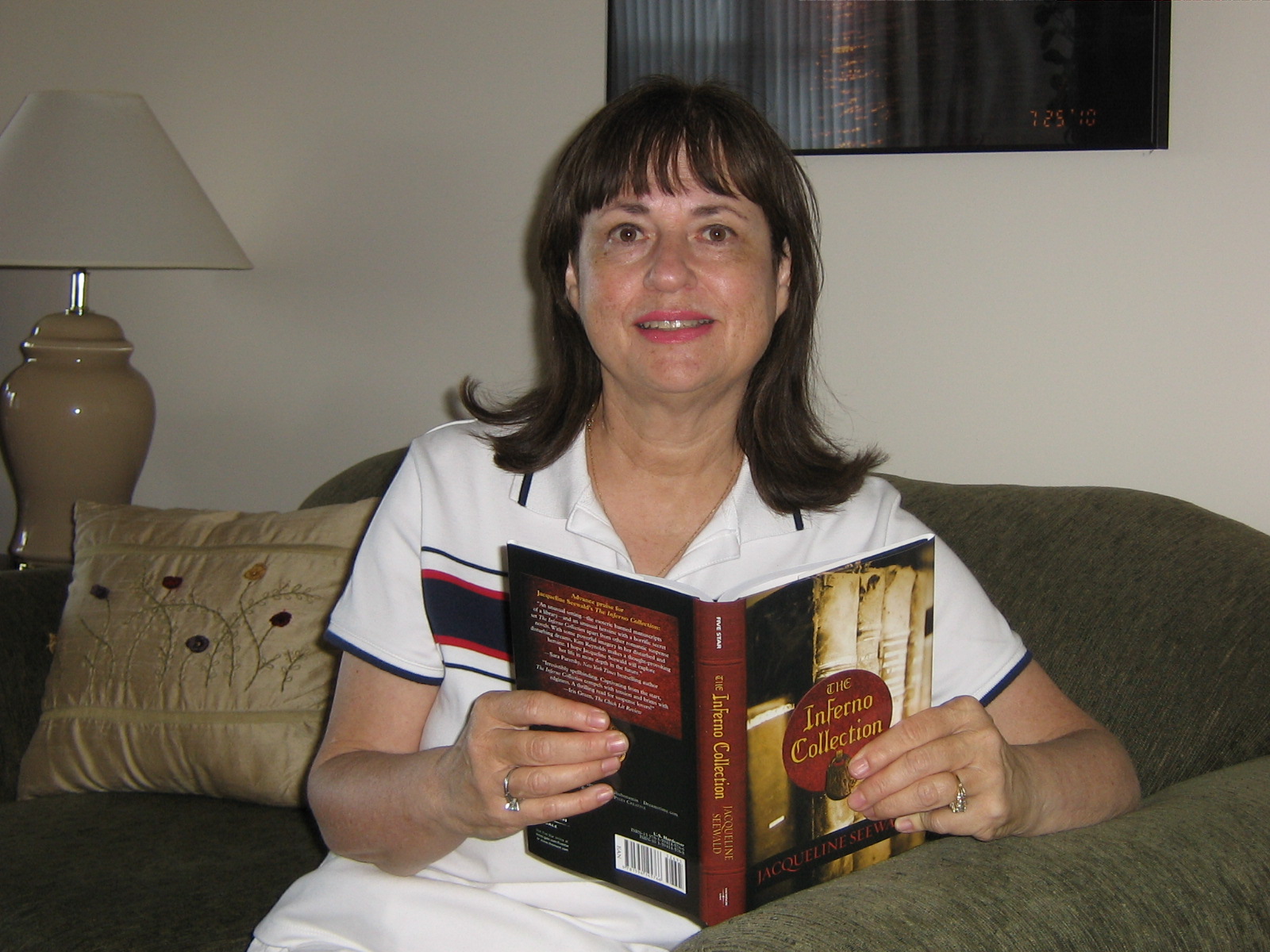
Writing Teen Fiction Today by Jacqueline Seewald

The Write Way Café welcomes Jacqueline Seewald, who offers tips for writing successfully for teens.

Even before J. K. Rowling's tremendous success with her Harry Potter series, publishers were frantically searching for fantasy and horror fiction for children and teenagers that they hoped would top the bestseller list. Imitation may be the sincerest form of flattery, but it does not insure success as a writer. Here are my suggestions:

Tip One: You don’t need to copy current market trends. (Honor bright!)

Teens have varied tastes in fiction. Not every teen or juvenile book needs to feature werewolves, vampires, witches, goblins, etc. Witness the huge success of such realistic teen novels as THE FAULT IN OUR STARS. Note that ALL THE LIGHT WE CANNOT SEE by Anthony Doerr which won the 2015 Pulitzer Prize for Fiction could easily be read and understood by teens as well as adults since the novel is suited to both. Here we have a book which is historical in nature. Teens are as curious about the past as they are about the present and the future.

Books set in the "real" world do have appeal for teenagers. Teens are not necessarily trying to read books that provide a total escape from reality. Even fantasy books need to be believable, providing an element of reality through character development to which readers can relate. In the crossover novel THE THIRD EYE: A PINE BARRENS MYSTERY, the real world is seen through the eyes of a teenage boy while his mother experiences it through an alternate reality. The paranormal elements in the novel are believable because the “real” world interacts with them.

Dystopian novels are still popular at the current time. But trends change rapidly. My advice, don't write for the market; write the story you need and want to write. We are all writers. We all have within us an important, wonderful story to share. Get in touch with your inner teen self. Strive for authenticity.

Tip Two: Develop a unique voice.

by Jacqueline SeewaldThis is one of the most important things in writing a successful young adult novel. This does not mean that you must write only from a first person point of view. However, teenage readers often respond well to a first person narrative. But ”voice” has to do with choice of vocabulary and style as well. In my YA novel, STACY’S SONG, the story is written in the first person from the main character’s point of view. Stacy has a sense of humor and a unique perspective.

Tip Three: Character identification is significant.

It is important to create a central character that young readers can both sympathize and identify with. Whether writing realistic or fantasy fiction, if the reader can't care about or relate to the main character, then he or she won't believe or accept what follows. A main character needs to be well-rounded, think and feel the way adolescents do.

Tip Four: Know teenagers.

If you are going to write about teens, you need to know them. Do some research. Besides raising two teenagers, I taught English and later Library Science. I taught at all levels: the university, high school, middle school and elementary. But most of my years were in the high school. I am accustomed to the way teenagers think, talk and behave. If you are not a teen yourself, talk to teenagers, read their magazines, watch their favorite TV programs, observe how they behave at malls, amusement parks, movie theaters etc. Listen to them.

Tip Five: Recall your own teenage memories.

by Jacqueline SeewaldDig deep into your psyche. How did you feel as a teenager? Were you confused about certain things? What made you happy? What troubled you? What are your most vivid memories of those times? Did you keep a diary or journal? If so, reread some of what you wrote.

My YA novel, THE DEVIL AND DANNA WEBSTER, published by Clean Reads in all e-book formats and print, is the story of a girl who has identity issues. She is also faced with peer pressure and conflicting values. Most of us have gone through similar problems as adolescents.

Tip Six: Get input from your own children.

Ask your teenagers to read your writing and critique it. Consider collaborating with your children on the writing of your fiction. I wrote WHERE IS ROBERT?, a YA mystery novel, with help from both of my sons who were teenagers at the time. Both boys contributed to the scenes of high school wrestling, since they both engaged in the sport. I couldn't have written the book without them. My son, Andrew, co-authored THE THIRD EYE: A PINE BARRENS MYSTERY published by Five Star/Gale/Cengage. He gave the teenage boy narrator an authentic “voice”.

Tip Seven: Make it dramatic.

Think like a cinematographer. Create vivid scenes. Dramatize your story. Don't just tell your story, show it. I'm certain you've heard that advice before! How to do this? Create meaningful, realistic dialogue for your characters. Each character should be an individual, talking in a certain distinct way to reflect a personal point of view, a unique way of thinking. Good dialogue leads to action and conflict between people with different viewpoints and goals.

Also, settings need to be described so that they seem real. In fact, there's nothing wrong with using real places for background setting. My five published YA’s are all set in Central New Jersey, an area very much like the one in which I lived and worked.

Tip Eight: Begin with an outline.

Outlines can be rough. They don’t need to be detailed. But you should have some idea about arranging the events of the plot line. This will be something to consult when writing your first draft with your key characters and scenes.

Tip Nine: When you develop your book, look for depth.

Although books for teens are usually shorter than those for adults, that doesn't mean they require less creative thought. Respect your readers; give them quality.

Tip Ten: Provide an element of mystery.

Teens as well as younger children enjoy a mystery. Every good work of fiction should have a plot that keeps the reader turning the pages, wanting to discover what is going to happen next. It's important to set up some sort of a question that can't be easily or immediately answered, a secret of the human heart that must be delved into.

Tip Eleven: Develop key themes in your YA fiction.

Teen novels are generally about coming-of-age, of finding personal identity, making sense of the
adult world, relating to it and fitting into it—or not.

by Jacqueline Seewald My latest YA novel is WITCH WISH. Val Williams believes she will never be as pretty or popular as her older sister Ailene. When Ailene dumps her on an unfamiliar road after an argument, Val decides to ask directions of the only person she sees, an old woman engaged in a garage sale. Val purchases a music box which the old woman claims has magical qualities and will grant Val one wish. Val wishes that that her sister would stop being so perfect but soon comes to regret her wish.

https://blackopalbooks.com/witch-wish/

https://www.amazon.com/dp/B07DRB3VVH

The success of J.K. Rowling’s books gave new hope and inspiration to those of us who write juvenile fiction. No longer could we gripe that children and young adults do not read. If nothing else, the reception the Potter books received proves that there is an audience for fiction among young people. Also, such books if well-written have a strong appeal for adult readers as well—think of THE HUNGER GAMES, DIVERGENT or the TWILIGHT series.

Your comments, suggestions and input welcome here!

About Jacqueline Seewald:   

Multiple award-winning author, Jacqueline Seewald, has taught creative, expository and technical writing at Rutgers University as well as high school English. She also worked as both an academic librarian and an educational media specialist. Nineteen of her books of fiction have been published to critical praise including books for adults, teens and children. Her most recent novels are DEATH PROMISE and WITCH WISH. Her short stories, poems, essays, reviews and articles have appeared in hundreds of diverse publications and numerous anthologies such as: THE WRITER, L.A. TIMES, READER’S DIGEST, PEDESTAL, SHERLOCK HOLMES MYSTERY MAGAZINE, OVER MY DEAD BODY!, GUMSHOE REVIEW, LIBRARY JOURNAL, PUBLISHERS WEEKLY and THE CHRISTIAN SCIENCE MONITOR. She enjoys painting landscapes and singing along to all kinds of music. Her writer’s blog can be found at: http://jacquelineseewald.blogspot.com.

Friday, March 17, 2017 | By: The Write Way Cafe
Truth is stranger than fiction, but it is because Fiction is obliged to stick to possibilities; Truth isn't. 
- Mark Twain

Thursday, August 4, 2016 | By: The Write Way Cafe

How Not to Become a Fiction Writer... by Michelle Lord

The Write Way Café welcomes Michelle Lord, who shares her bumpy road to writing fiction.

I’m a writer and have been for years.  Whether it was school essays, letters to persuade a person or company to do what I needed, or nonfiction how to - that was something I could write well.  Though, after years of writing nonfiction I really wanted to write fiction.  I love good stories, action, mystery, thriller, whatever, that was the type of fiction I wanted to write.  I can tell you within the first 15 minutes who really was the bad guy or how things would end up, sometimes a red herring got me, but most of the time I was correct.  So when it came time to start writing fiction, in theory I should have been able to sit down and start writing.  Well, three years later I am still struggling to write fiction.  Why you may ask, well I’m trying to figure that out myself, and hopefully keep you from doing the same thing.

At first, I would start with a blank screen and try to be a “pantser” and just let my mind go.  Guess what, I would write a couple of sentences, get myself all confused and stop.  I would do this several times over the course of several months and realized that is never going to work.  So, next comes plotting.  I read books, took courses, asked other writers what they do and I was told to make an outline.  You need to know what happens at the end so you know where you are going.  That made sense, so I tried to plot.  I tried the Snowflake, Hero’s Journey, 3 act, 4 act, plotting wheel, whatever else I could find and I was getting nowhere fast.  I would sit and go blank.  So another year goes by and I still have nothing but starts of stories with no endings. I asked other writers what to do, as I couldn’t get past the first paragraph.  I would read it, then rewrite it, and rewrite it again and give up. They told me everything from drinking before I start (but I don’t drink), to just type and don’t worry about it, and then maybe fiction writing isn’t for me.  Talk about encouraging…

I then started getting emails about these premade plots.  They had a beginning, middle and end.  They had characters already thought out and all I have to do is change names, locations, and make a different twist or such and I could finally write fiction.  You just follow the plot and write.  I would go in and setup the plot to where I had separate pages for each chapter.  I even got those super “perfect” plots that break each chapter down into scenes to where you basically just write by numbers.  I can do that.  I used to do the paint by numbers so I should have no trouble writing by plot points.  Well, I felt too tied down by this method.  I would try to follow the story as it was outlined, but I just felt trapped.  My characters wanted to go one way, and I was trying to take them another.  Now another year has gone by and I have spent way too much money on premade plots, courses, books, etc., and I still have nothing for someone to read.

This brings us to now, the year 2016, the year I turned a speed limit – 55.  You know the speed no one can drive?  I have finally come to the decision that I either make this work or go in a different direction.  After analyzing where I was and what direction to take I realized I need to write short fiction, at least for now.  I’ve been studying the Lester Dent method of writing – pulp fiction – action, action, and more action and then the end.  Writing fiction is actually starting to click now.  If I can write several short stories, then I will have titles to publish, and finally start seeing results.

So, what is my point after all this?  Find what works for you and write.  Don’t buy every new “shiny thing” that comes along thinking you will find a shortcut.  If you need to, buy a couple sets of premade plots to get ideas flowing, but don’t buy every set that comes out, as you will never use them all and they will just get you confused.  Make time for writing, every day.  No excuses.  If you are staring at a blank screen and have no idea what to do start typing about anything.  Your day, your wishes, venting about something that is bothering you, whatever, just write.  Once you have all the mess out of your head then you can start to focus on your story.  Again, find out what works for you and do it.  If you need an outline, make one, but don’t spend so much time on it that you never write the story.  If you are pantser, maybe you just need to make a short outline of just how many chapters, where you are starting from, and then where you hope to end up.  You don’t have to end up there, but at least you have started writing.  The main thing is to quit making excuses.  Excuses of why you can’t write, don’t have time to write, or whatever else you tell yourself that keeps you from writing. Don’t be like me and waste years hoping to write fiction, remember to BIC HOK TAM, which means butt in chair, hands on keyboard, typing away madly… till next time.

Amazon author page        Blog


About Michelle:
     Writer, fiber artist, and Renaissance woman, that is how you would describe Michelle Lord. Born in Bloomington, Indiana, but has lived in Texas since 1976. She considers herself a Texan, even though her husband says you have to be born in Texas to be a Texan...oh well...
      Michelle is known for her art dolls, purses, and other fiber art projects. Her eclectic style comes through in her writing. She is currently working on a series of books on making an art doll from start to finish with Doll Artistry and Tips, Tricks, and Tools for Doll Making ready. She also has two different embroidery motif books, a other assorted nonfiction and in the near future fiction books in her portfolio.


Friday, April 10, 2015 | By: The Write Way Cafe
Good fiction's job is to comfort the disturbed and disturb the comfortable.
- David Foster Wallace

Friday, February 20, 2015 | By: The Write Way Cafe
The test of any good fiction is that you should care something for the characters; the good to succeed, the bad to fail.  The trouble with most fiction is that you want them all to land in hell, together, as quickly as possible. 
- Mark Twain
Friday, June 13, 2014 | By: The Write Way Cafe
When we read (and write) fiction, we practice putting ourselves in another’s shoes. We develop empathy… 
- Debbie Fuller Thomas, NovelMatters.com, May 25, 2012
Friday, October 4, 2013 | By: The Write Way Cafe
A writer's job is to imagine everything so personally that the fiction is as vivid as memories.
- John Irving
Tuesday, October 30, 2012 | By: Lynn

Time to Write

I write for a living. I also edit for a living. I love my work and am grateful to have it. But it keeps me busy and I have not felt able to devote much time to working on my current WIP…for quite some time. It's been a WIP for longer than I like, but I tell myself it can't be helped. I have to contribute regular income to my household and there is only so much time in a day, week, month. Only so much physical and emotional energy within me to put out. However, there is nothing like getting a book contract for renewing my commitment to my not-yet-completed "next" book. (Pause here for brief happy dance and smiles for my new publisher, Crimson Romance !)

I Got, Got, Got, Got No Time
I’m weary of talking about not having enough time. I'm kind of bored but not surprised with myself that I’m writing about it again. I wrote a post about it last summer and discussed how those of us writers who also work jobs and take care of families need to be creative, something we're good at, in finding time to write. And here I am again, reiterating the challenge.

I'm open to suggestions for how to put time on my side. Here's a thought from Hope Clark in her October 26th Funds for Writers newsletter and website. She suggests taking a hard look at life's demands.

"We have to give up something else to make writing happen. We have selected a crazy hobby/career path/dream that is one of the most time-consuming interests on the planet. It starts as a whim, then a dream, then an urge that grows. You have to do this. You NEED to do this . . . this . . . writing.

So, for every new hour of writing, what other hour of something else will you sacrifice? Give it a name. Cleaning? Jogging? Sleeping? Gardening? Lunch?" she writes.

The P Word
Clark makes a good point, because there really is only so much time to work with. It's a likely conclusion that I have to set my Priorities to, well, Prioritize working on my book. It seems that even though, as Clark points out, we as writers often glow when we talk about what writing means to us, we don't do it. And according to Jennifer Blanchard at Better Writing Habits , being too busy to write, another way of saying not having enough time, is the number one reason writers give for not being productive with the thing they love. She, too, attributes this situation to not Prioritizing.

"Most likely you’re making time for non-productive things, like watching TV or surfing the Web. That means you actually do have time to write, you’re just not making it a priority to write," she writes.

It seems a good, stiff shaking of myself is in order. As Clark, author of Lowcountry Bribe and The Shy Writer, noted and what we all know, we can't do everything. We may have to stop doing something we feel has greater importance than our writing. She's found this out by becoming more successful with her writing.

"As my writing grew, as I had to promote a novel I never had to before, the demand for my other hours grew ravenous for my attention. How could I find more time? There went some of my gardening . . . I saw my chickens less. The house is definitely not as clean. I stopped going to the gym."

It seems obvious but nonetheless mindboggling—I have to pick what I'm going to spend time on. And if I seldom pick writing fiction, I'll not complete my beloved WIP. I have already cut back on housecleaning, so what can I cull? I'll have to figure it out. It's time.

Any suggestions?


Image from Dreamstime

Tuesday, September 25, 2012 | By: HiDee

Stranger than Fiction


They say truth is stranger than fiction.  We write fiction, creating unique and different worlds within the pages of our books.  We also create familiar and comfortable worlds, populated with characters readers can relate to, and therefore care about.  But every once in awhile, truth blows us away.  A real life event motivates us to create a story around it, but the idea is so strange that we find ourselves thinking there’s no way anybody would ever believe we dreamed up such a thing, and who would buy it?  And yet the event really did happen.

Is that why so many people are obsessed with reality TV?  Can people or situations presented on TV really exist as they are portrayed?  What’s the attraction?  And why do we care?

The 24th season of Survivor began last week, which means I will be parked in front of the TV every Wednesday night for the forseeable future.  I’m not interested in being a member of the cast.  Are you kidding?  One, I’m not a water lover.  Two, I don’t like spiders and snakes.  And three, just. . . no.  I’m perfectly happy watching from the relative safety of my family room.  I watch the show because of the people.  The writer in me is fascinated with their motivations and interactions. There are obviously different mentalities on how to play the game.  What makes these people tick?  How do their personalities shape their game strategies?  What makes one player “click” with another and form an alliance?  How much trust can you have in anyone playing a game for a million dollars?  My mind churns with character possibilities.

Other than Survivor, I’m not a big TV watcher. I’d much rather curl up with a good book 99% of the time.  But occasionally, as hubby flips through the channels complaining that there is nothing on (again or still), another reality show catches my eye.

Call of the Wildman is unique.  A backwoods kind of guy (Turtleman) travels around removing nuisance critters from buildings and properties.  In lieu of payment, he accepts whatever the owner can pay - ranging from gas money to food to furniture and other goods.  It’s obvious he does what he does because he loves helping people.  He’s funny, but the show is heartwarming, too.  How many people go out of their way to help others and expect nothing in return?

Mantracker pits two people against two trackers on horseback in remote areas.  The people have 36 hours to reach a prearranged spot, 25 miles away, without getting caught by the trackers.  Sometimes the people have wilderness experience, sometimes they don’t.  But their goal is all the same: to outsmart the trackers and reach the spot without being captured.  Many people today are looking for ways to get back to nature. This show offers an opportunity to pit your skills and knowledge against nature and man.

What young girl (and yes, some of us older ones, too!) hasn’t dreamed of being beautiful and skinny enough to be America’s Next Top Model?  Diverse personalities make the modeling world a different and sometimes difficult place, one which not all are cut out to thrive in.  This show provides a glimpse of the hectic pace and the hard work that goes in to being a model.  How far outside your comfort level are you willing to go, especially when your job is on the line?  I vividly remember one episode where the models were expected to showcase jewelry - while “wearing” things like giant cockroaches and tarantulas.  I would have lost that job.

Music and dance reality shows offer people the chance to strut their stuff, to show off their talents and maybe even launch careers.  The Biggest Loser offers obese people the chance to get help with their weight problems and change their lives. Who Wants to be a Millionaire and The Weakest Link provide opportunities for people to match wits by answering trivia questions.  Viewers may envy the singers and dancers their opportunities for fame.  They may watch the Biggest Loser to learn ways to bring change to their lives.  And who doesn’t think they could go farther than at least some competitors on trivia shows?

The purpose of some other reality shows eludes me.  Big Brother – don’t we have enough Big Brother in the world already?  Who needs to live in a house with strangers to experience this?  The Bachelor or The Bachelorette – I know a lot of women who love these shows but they don’t do anything for me.  Fear Factor – um, NO, do not put me in situations you think will make me overcome my fear.  I’ll only hate you for it.

But in my opinion, the worst of them all is Honey Boo-Boo.  Children are supposed to be cute and natural, not made up to look like teen-age celebrities gone bad.  Previews are made to get viewers’ attention and entice them to watch shows, but these previews are downright scary and I refuse to watch the show.  That child is going to be a holy terror as a teenager.  What is that mother thinking?

Reality TV shows represent different worlds, worlds as diverse as those writers create for their books.  Obviously there are people or situations that viewers relate to, or the shows would not be as popular as they are.

What reality TV shows are you hooked on?  Why do you care about the people on the show?  Do they fuel your writing in some way?  I’d love to hear your thoughts.