Showing posts with label J. Arlene Culiner. Show all posts
Thursday, January 12, 2017 | By: The Write Way Cafe

The Problem with Books by J. Arlene Culiner

The Write Way Café welcomes J. Arlene Culiner. She writes with sincerity and talks about why it is important to tell a great story.  

(Note: Arlene will be checking in over the weekend as she is traveling today.)

Thank you so much for having me back at the Write Way Café to talk about my latest release, The Turkish Affair. But first, I’d like to talk about other people’s books and why I love or don’t love them.

I’m lucky: five or six absolutely wonderful books with humor, exciting language, an original way of telling a story, have recently made their way onto my reader. But there have been others too, well-written, almost interesting. Almost interesting? Yes, a certain amount of research has gone into them, and I can’t complain about the writing. It’s just that, for me, there’s something missing. It took me a while to work out what — but now I know: sincerity.

No, we aren’t all alike, and no, we don’t all like the same books, thank goodness. But I do think one of the reasons many of us read, is to have a peek into someone else’s life. A story doesn’t have to be autobiographical, but there have to be elements that show the author is writing about something he or she feels absolutely passionate about, or about a personal experience. And, for me, that experience can’t be a few glossy impressions gathered during a visit to a tourist destination. It has to come from a real emotion, even one as tiny as feeling alone and desolate one afternoon, or having a terrible crush on someone unavailable, or a failure of some sort. Those experiences make us human, and sharing them brings us closer to each other. Here are a few examples of what I mean:

I’ve recently been reviewing books for an English site. One was written by a young man drifting around England on his broken down bicycle. Everything he owned was tied onto the back, and he spent the nights either camping or dropping in on friends along the way. His one great passion is music, and he earns his way by busking, playing his guitar and singing his own compositions under bridges or on busy street corners. He wrote about how frightening it can be sleeping rough but how beautiful to wake up with the birds, rabbits, and deer. Yes, his grammar is shaky and words are misused, but the book is personal, and sincere, and touching. And fascinating. Haven’t you always wanted to have a peek into that sort of life? I have.

The next book was a story written by a man but from a woman’s point of view. The heroine wanted to be a writer for the BBC, and she tried, then flopped, tried and flopped, tried and flopped again before having a bit of success… then flopping once more. Not only that, her love life was disastrous. But the book is so warm and funny, I roared with laughter all the way through. The author had also once been a writer for the BBC, and you knew this was his own experience. And it worked. It was wonderful.

Another book arrived: a romance between a seamstress and powerful Scottish laird in the nineteenth century. There was even an element of suspense and danger thrown in. Well written, the grammar was fine, there were no misused words. The seamstress got her man; the laird got his seamstress; the villain got his comeuppance. It was happily ever after. And I was happy it ended. I could forget it. It had nothing personal in it. It was a pure invention — and not very deep invention. It was written to sell, but not to open a conversation or to share. I was pretty certain the author, living in American suburbia, had been on a vacation to Scotland and seen a few castles. That was it.

Am I making my point? Two first books made my life richer; the third wasted my time. Do you need that personal element too? Leave a comment below; I’d love to hear how you feel about this.

Okay, I can hear your question: how much personal experience did I put into my romance, The Turkish Affair?

MY HERO
Many years ago, like Anne, the heroine of The Turkish Affair, I was living in central Turkey and working as a translator. Sometimes, I’d head out for other parts of the country. Once, the bus I was traveling on pulled off the main road, down a rutted lane, and into an archaeological site — we were to deliver a package of some sort. While we waited, I stared idly out of the bus window and caught sight of a man ambling in the direction of a tumble of pillars and ruins. He was lean, supple, and the bright sun caught the golden blaze of his hair — he was a very romantic figure. Who was he? An archaeologist? I never found out. With a puff of noxious smoke, the bus sprang to life, turned, roared back toward the main road. Where was that site? I did go that way again, but never found it. But the blond man’s image has remained with me all these years; he was slated to become my hero, archaeologist Renaud Townsend.

EXPERIENCES THAT WENT INTO THIS BOOK
Another time, I was living with a Turkish archaeologist. We had been at a friend’s house — another archaeologist — and were enjoying ourselves. Time flew, and before we knew it, it was too late to go home: back in those days, there was a curfew, and you would be arrested if caught out in the street. Therefore, we had to spend the night at the friend’s house. Around an hour later, there was a knock on the door. It was the police: some antique coins had been found in the baggage of tourists leaving the country — it’s highly illegal to smuggle antiques — and the two archaeologists were ordered to drive down to the coast, verify the worth of the coins. I accompanied them, and the way both men summed up the situation and helped the tourists (who would have had a terrible time of it, and probably would have gone to jail without trial) is told in The Turkish Affair.

Another time, I got myself into a dangerous situation on a road out in the backcountry. I shouldn’t have gone walking on my own out there — it was a very stupid thing to do. I was lucky to be rescued by a very brave and rebellious young woman, Leyla, and I couldn’t resist putting her, her unpleasant mother, the whole incident, into The Turkish Affair.

In fact, I always put experiences from my own life into all my books, no matter what the genre. But I think I must be very fortunate: I’ve had quite an original wandering life and many adventures.


Danger at the ancient Hittite site of Karakuyu

A top notch Washington journalist before a liaison with the wrong man implicated her in scandal, Anne Pierson has been hiding in backwoods Turkey and working as a translator. She’s determined to keep her past a secret, to avoid personal relationships. But after meeting Renaud Townsend, her discrete little world is turned upside down.

Archaeologist Renaud Townsend is troubled by Anne Pierson’s refusal to talk about her past, but instinct tells him he can rely on her. Or is it only desire speaking? A lusty love affair for the duration of the summer dig is a very appealing idea.

When Anne’s bad reputation links her to stolen artifacts and murder, the budding romance with Renaud comes to a halt. If they learn to trust one another, her name can be cleared. But is there still enough intensity to give love a second chance?


Published by Crimson Romance
ISBN 10: 1-5072-0121-4
ISBN 13: 978-1-5072-0121-3
eISBN 10: 1-5072-0122-2
eISBN 13: 9 978-1-5072-0122-0
https://www.amazon.com/Turkish-Affair-J-Arlene-Culiner-ebook/dp/B01KGO49XS
http://www.barnesandnoble.com/s/J.+Arlene+Culiner
https://store.kobobooks.com/en-us/ebook/the-turkish-affair

http://www.j-arleneculiner.com
http://anecdotes.over-blog.com
http://j-arleneculiner.over-blog.com
https://www.goodreads.com/author/show/7158064.J_Arlene_Culiner
https://www.facebook.com/jarlene.culiner
https://twitter.com/JArleneCuliner

EXCERPT
     The door opened. Anne looked up. And froze. Speak of the wolf and you see his tail. Renaud Townsend. She stared at his long, tight body, the tousle of sun-bleached hair. Noted again his casual, elegant saunter as he entered. Remarkable. But what was he doing here? What mad coincidence had brought him to Necmettin’s café? And now that he was here, how could she avoid him? Get up and go home? Her fingers inched toward her purse strap in preparation for the getaway, while she lowered her head and pretended to read. But, despite her desire not to look, she couldn’t help glancing up.
     He was watching her.
     Their eyes locked. Time became fluid, spilled out into a long, loose eternity. Until, finally, he was moving again, easing his way toward her, stopping beside her table, his blue eyes radiating intimacy. Intimacy she didn’t need. Or want.
     “Hello.” His voice was warm, coaxing. Very different from the tone she’d heard this morning.
     Speech temporarily deserted her. His eyes scanned her mouth slowly, and her throat closed. His gaze was as intimate as a caress.
     “I’m happy I’ve run into you again.”
     He meant it; she saw that. Did it mean he’d been looking for her? Combing the scruffy town until he found her? Ridiculous. Why be preoccupied by a woman he’d met only briefly?
     “I want to apologize for my rudeness at the site this morning. I felt guilty all afternoon.”
     She stared at him blankly. Humility was the last thing she’d expected. She fought her curiosity … and lost the fight. “Guilty?” He didn’t look like the sort of man who’d know what the word meant. She had him pegged; she knew his type. He was a man who helped himself to what he wanted and ignored the rest. As easy to read as a fluorescent billboard.
     He nodded. “Please, let me explain.”
     But he didn’t look quite so sure of himself now. And she felt herself relenting. “You don’t have to explain anything.”
     “Of course I don’t have to.” His lips twitched into a faint smile. “I want to. My behavior was offensive.”
     She forced herself to shrug, as if his explanation didn’t matter to her. She had to discourage him, because friendliness was the last thing she needed from him. Arrogance she could deal with; it would be easy keeping him at arm’s length with that. But warmth? Sympathy? She didn’t think she was strong enough to handle those, not when his very presence excited her, made her want to open up to him.
     “Explanations really aren’t necessary, Mr. Townsend. Please don’t bother—”
     “Not Mr. Townsend. Renaud. Just Renaud and Anne, okay?”
     How calm, how vibrant his voice was. There wasn’t the slightest trace of the aggression she’d heard this morning. And first names were too intimate. She wanted to stop him, say, “I don’t want you in my territory. You spell trouble.” She didn’t want complications and emotional upheaval. Those would churn up her daily life, turn it into complete misery.
     Yet it was a nice name. Renaud. She tried the weight of it in a part of her mind. “Yes,” she heard her own traitorous mouth murmur.
     He indicated the second chair at Anne’s small table. “Mind if I sit?”
     Of course she minded. Or did she have a mind left at all? She shook her head. He’d traded in the tight T-shirt for a loose, beige shirt that managed to suggest all the tight muscles it hid. He still wore jeans, though. Tight, worn jeans outlining his thighs. His hair had been brushed back into a semblance of order, but a few unruly curls invited her fingers to touch.
     “It’s the first time I’ve been on a site in Turkey. I know nothing about local customs; I don’t speak a word of the language. And having responsibility for the site dropped onto my shoulders only days ago made me less than pleasant this morning.”
     “I wasn’t particularly charming either.” She hadn’t wanted to say that. Oh, why was he making her say things she’d had no intention of admitting? The last thing she should be doing was encouraging him, opening the door to easy conversation.


AUTHOR BIO
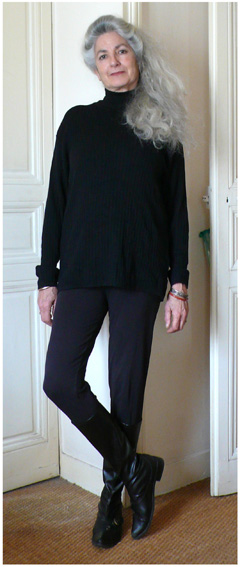
     Born in New York, raised in Toronto, J. Arlene Culiner has spent most of her life in England, Germany, Turkey, Greece, Hungary and the Sahara. She now resides in a French village of no interest and protects all creatures, especially spiders and snakes. She works as an actress, a photographer, a contemporary artist, a musician, writes mysteries, history books and perfectly believable romances. Her heroines are funny and gutsy, her heroes, dashingly lovable. All are (proudly) over the age of forty. The Turkish Affair is her fourth romance.
     Two of her books have just been re-released: a mystery, Death by Slanderous Tongue, by Club Lighthouse Publishing; a non-fiction book, Finding Home in the Footsteps of the Jewish Fusgeyers, by Now and Then Books.
     She’ll be starting a podcast, In a Small French Village, in February. Some of her cartoons can be seen at http://jillculiner.over-blog.com/ and her short fiction at http://anecdotes.over-blog.com/


Thursday, October 20, 2016 | By: The Write Way Cafe

For a Tail-Wagging Good Time...

MAN'S BEST FRIEND:
10 ROMANCES FOR PET LOVERS


Pre-order available now.  Release date: October 24, 2016

It's a tail-wagging good time for these ten animal-loving couples as they find their happily ever afters with their best four-legged friends' blessings.

Lessons in Magic: Recently unemployed and rudderless, Phoebe agrees to get her late aunt Edna's house ready to put on the market. While cleaning up cobwebs, she unexpectedly discovers her latent family talent for summoning a demon, who arrives disguised as an irresistable puppy. Noah Rossi, wizard in training, comes to the rescue, but can he save her from accidentally destroying the universe?

Text Me: Abigail Jeffries gets a random text from a stranger only to discover the sender, Carter Coben, isn't so strange after all. Soon she's caught up in a game of assumed identities with the same gorgeous guy she got fired from his job. Carter has no idea that "She Hearts Dogs" is the girl who blew his world apart. They'll have to navigate mixed signals, mistaken identities, and misunderstandings to find real love.

All About Charming Alice: Quirky Alice Treemont gives up hope of finding love in rural Blake's Folly, Nevada, where she spends her time rescuing unwanted dogs and protecting the most unloved creatures on earth: snakes. That is, until dashing and well-to-do author Jace Constant comes to town to research his new book. Opposites indeed attract, and soon the whole town is determined to make a love match.

Wildflower Redemption: Luz Wilkinson returns to tiny Rose Creek, Texas, to lick her wounds and toughen her resolve against love's sting. She wants nothing more than to spend her days caring for discarded animals. But will Aaron Estes, her riding student's widower dad, spur her to try again?

Atonement: A former marine sniper suffering from PTSD, Deputy Nicolette Rivers hides her own deadly secrets from everyone but detective Con O'Hanlon, who, along with his military dog Cadno, is more than willing to help cover up the fallout. But is he too late to prevent Nic's dark, downward spiral? Or is Con the one man stronger than her demons?

Fated Hearts: Sheriff Carter McAlister and his dog, Dublin, have their lives upended when he offers mysterious newcomer Henley Elliott a job as his assistant. Breaking through her carefully built shell proves to be a near-impossible task, and now a dangerous new presence in the Cove seems to be targeting Henley. To get a second chance at happily ever after, Carter and Henley will need to leave their secrets and scars in the past.

Sweet Texas Kiss: Veterinarian Gavin Cooper can't wrap his mind around why country music superstar Macy Young would end up inheriting his family home. Seeing his childhood memories handed over to his high school rival - the first woman to break his heart - stings. Luckily, Macy can't sell the house for one year - plenty of time for him to find a way to get it back. Can they find a way to bury their animosity and rediscover their first love in the process?

Unstoppable: When veterinarian Lara Monroe's fellow cat shifter - and secret crush - Booker Chase needs help, she's willing to use her special healing touch to help him survive his emotional hell. As a top-notch physician, he's not convinced anything can repair his soul, broken from the loss of his wife and burdened with PTSD from his service in Afghanistan, but Lara is showing him flashes of what might be. But they can't grab this second chance at love unless they can shut down the Nexus Group forever.

Bloom: When L.A.'s charity fundraising maven Ava Bennett heads out to the middle of nowhere to check on a friend for her rock star client, she never expects to tangle with infamous music producer Nate Robinson, nor endanger his dog's health. Can a career woman find love with a virtual hermit?

What a Texas Girl Dreams: They are opposites in so many ways, but the more veterinarian Trickett Samuels gets to know footloose and fancy free Monica Witte, the more he wonders if he can convince this Texas girl that having roots will only help her soar higher.


Amazon 

Barnes & Noble 

iTunes


Thursday, June 2, 2016 | By: The Write Way Cafe

Getting to Know J. Arlene Culiner

The Write Way Café welcomes J. Arlene Culiner.  She's led an itinerant life, learned from her experiences, and done some crazy things in the name of love! 

Tell us a little about Felicity’s Power.
     Felicity’s Power is the story of a couple whose romance didn’t work the first time around. It starts out in the hippie days in San Francisco, when Marek, my wonderful hero, is finishing a doctorate in literature. He needs security, success and a family — his own father is violent and alcoholic — but when he meets Felicity, a very unlikely partner, he is immediately attracted. Felicity is rebellious, adventurous, sexy — all the things that are exciting in life. However, the last thing she wants is stability. She needs to see the world, be useful, and when she refuses to settle down, marry, have a family, the romance is doomed.
     Years later, Felicity seeks Marek out again. She’s been living in the world’s danger spots as an aid worker, and is now ready to come home. She has always loved Marek, but can she convince him to give their romance another chance? It doesn’t seem likely. Now a famous author, Marek lives in isolation. He hates travel, and certainly has no desire to have Felicity break his heart a second time. But Felicity is a very determined woman, and she’ll do her best to make him change his mind.

What or who has been instrumental in or to your writing journey?
      I’ve led an itinerant life, putting myself in highly uncomfortable situations in places where I knew no one, understood nothing, had no reference point. Those experiences kept me alert. With no one to communicate with, and totally dependent on my wits, I had to keep my eyes open, observe what was going on around me. And, unable to communicate, I kept journals. That was the first step in becoming a writer…

What’s the best writing advice you’ve been given?  What’s your best writing advice for others?
     Read. Read. Read more. Read books that are different from what you would normally choose: history books, experimental novels, intelligent travel accounts, and certainly non-mainstream works published by small publishers. These last aren’t money-makers, or popular genre fiction, but they do have the finest writing. Also, expand your vocabulary, devour grammar books. Having a good knowledge of grammar not only helps you produce better work, it can assist you in tricky situations. Like several other authors I’ve met, I’ve found myself (although rarely) confronted an editor or two who just didn’t know their job — a very embarrassing situation. These people want to change your style, your sentence structure, add unnecessary conjunctions, remove important commas, but they miss the real errors. They are dangerous.
     I’d like to add here, that my editor for Felicity’s Power at The Wild Rose Press, Eilidh MacKenzie, is wonderful. This is the second book I’ve worked on with her — the first was A Swan’s Sweet Song — and she is just a pleasure.

What “keepers” are in your home library?
     There are so many, and most are non-fiction. But since we’re talking about novels, I’ll mention two fiction titles, both wonderful satires: Chrome Yellow by Aldous Huxley; Cold Comfort Farm by Stella Gibbons.

If you could be a character in any book you’ve read (or written), which character would you be and why?
     Oh, I’d love to be Felicity Powers, the heroine of my book. She’s so smart, so determined, so much fun. And she gets to be with Marek Sumner, my hero.

Characters often find themselves in situations they aren't sure they can get themselves out of. When was the last time you found yourself in a situation that was hard to get out of and what did you do?
     For years, I’ve traveled alone, often crossing countries on foot and sleeping in fields. Doing this sort of thing has dropped me into some admittedly tricky situations. Fortunately, I’ve been able to get out of them, otherwise I wouldn’t be here, safe, sound, and answering your questions. I was arrested on a false charge of espionage in Turkey, was twice held in custody by very corrupt police in the Sahara desert. I’ve had to hide from one ambusher in the mountains of Spain, from another under deep snow in Turkey. I’ve escaped rapists, a murderer or two, a few Mexican gunmen, an all-night stalker on the Slovakian border, and I once got lost in a minefield in the middle of a war zone near the Mauritanian border. How did I manage to get out of such conundrums? By sensing the danger, keeping a cool head, having a good line of chatter… and lots of luck, I suppose.

What has been the toughest criticism given to you as an author? What has been the best compliment?
     Rejection slips are pretty tough criticism, but when I look over the stuff I sent out years ago, I understand why it was refused: most of it was pretty awful. However, the toughest criticism I’ve had, was unjustified (and this does happen, often enough, in the world of non-fiction.) I had sent out a manuscript; the publisher liked it, was considering it for his list. Then, because it was an historical work, he sent it to a friend, a university professor. She immediately attacked me, claiming I had no right to write about that subject because I wasn’t a professional in the field, and wasn’t attached to a university. It wasn’t a shattering experience — I knew my cousin, a specialist in pre-historic, middle-eastern wells (!) had the same thing happen to her twice — but it was very annoying. The best compliment I’ve had, is praise for my style and content.

We’re adding books to our Café menu.  Would your book be a drink, an appetizer, an entrée or a dessert?  What would you call it?
      A drink, I think. Heady, fun and bubbling. I’d call it Pure Felicity

Tell us about the book in your closet.
     It’s a rather strange autobiography — strange, because it doesn’t concern me, but the people I’ve met over the years. It isn’t at all politically correct, thank goodness.

And now for the fun stuff!

If you aren’t a full-time writer, what is your day job?
     I’m a contemporary artist, a photographer, and I also work as an actress and baby-boomer model. However, an enormous amount of my time is spent on music. I’m only an amateur musician, not a professional, but I play in three orchestras, one band, and several chamber groups. I have rehearsals and concerts all the time, and all the excitement, tension and pleasure that comes along with performing. What instruments? Oboe, English horn, baroque oboe, oboe da caccia, flute, piccolo and saxhorn.

Are you a dog/cat/other person?
     My cats and dogs are part of my entourage; I love hugging them all, and I need to feel their fur under my fingers. When I’m away from them for more than a day, I miss them terribly. However, I love every creature: bears, foxes, bees, wasps (I’ve had some great relationships with wasps who had their nests right at face level, but knew I wouldn’t hurt them), snakes, and spiders (they’re all so different and so beautiful, I watch them for hours).

What is your favorite season and why?
     Winter, when the snow is deep, and dark comes early. I love the atmosphere in cozy, lamplit, warm places.

What’s the craziest thing you’ve ever done in the name of love?
     Oh boy. I’ve done some crazy things, believe me. Changing countries, hopping on a plane, or boat, or train, abandoning all for a moment’s passion; racing across Europe just to meet someone for a few hours; climbing out of windows, shinning up walls; hiding for an entire day in a locked, 15th century chapel with a new lover, while a previous one, wildly jealous, pounded on the door. However, I suppose the craziest thing I’ve ever done was risking my life, sneaking through night streets after curfew, just to get to the hotel where a lover was waiting. Soldiers with machine guns were patrolling everywhere, and I might have been shot – certainly I’d have been arrested if I’d been caught. I now shake my older, wiser head at such follies, but I never know what adventure might be waiting for me next…

Do you have any strange writing habits (like standing on your head or writing in the shower)?
     I work in a closet. No kidding. The apartment we live in (just outside Paris) for part of the year, is so tiny, I moved my computer and tables into a closet (without windows, of course.) Thus, I spend much of my life as a closet writer.


Contemporary Romance from The Wild Rose Press

The evening Marek Sumner opened his door to the wild-looking Felicity Powers, he knew nothing would ever be the same again. But he needed stability, Felicity craved adventure, and love and passion couldn’t keep them together.

Years later, having lived in the world’s most dangerous places as a foreign aid worker, Felicity is back, still offering her love. Why would Marek risk having his heart broken a second time? Now a well-known author, he loves his calm, solitary life in an isolated farmhouse. He and Felicity are just too different; their relationship could never work.

Yet Felicity is just as fascinating and joyful as ever. Can she convince him that love can be even more delightful the second time around?

Amazon        Wild Rose     Barnes and Noble

About J. Arlene:  
     Born in New York, raised in Toronto, J. Arlene Culiner has spent most of her life in England, Germany, Turkey, Greece, Hungary and the Sahara. She now resides in a 400-year-old former inn in a French village of no real interest. Much to everyone's dismay, she protects all living creatures -- especially spiders and snakes -- and her wild (or wildlife) garden is a classified butterfly and bird reserve.
     In her perfectly realistic contemporary romances, heroines are funny, and heroes are dashingly lovable. All are proudly over the age of forty.


Thursday, January 21, 2016 | By: The Write Way Cafe

An Interview with J. Arlene Culiner

The Write Way Café welcomes J. Arlene Culiner, who discusses her very interesting road to publication and offers advice: Never. Ever. Throw away any writing.

Where did the idea for your story come from?
  Years ago, I worked for Radio France. Because I’m North American, my program consisted of presenting the history of country music and interviewing musicians who came to town. Only once, however, did country musicians show up — this was long before that music became popular in France. I was also in a very boring backwoods city situated in a boring backwoods part of the country, so no musician in his right mind ever wanted to come there.
The country musicians who did show, were two brothers dressed in flashy cowboy regalia but, even so, they were unlikely candidates for a Texas ranch. Both rather rickety, even shop-worn, they were French but had been born in Poland. They were also dreadful musicians. However, they were kind, funny, had great stories, and loved beer. I stayed in the bar with them all evening, chewing the fat, drinking much beer, and learning about the music circuit. I even managed to tape an excellent interview.
The next day, back at the radio, I sat down to prepare the interview tape for my program… and discovered it was perfectly blank. In my soggy, beery, over-excited state, I’d obviously forgotten to push tab A, or button B, or plug in wire C, or even turn the infernal machine on. There was no way I could get another interview — the guys had left town and, anyway, I certainly wouldn’t have been brave enough to admit such total incompetence. But they had given me great material for a book — one I didn’t get around to completing.
     I have, over the years, acquired many chaotic, torn, stained, utterly unpleasant pieces of paper — a sort of personal slush pile. In it are all the mysteries, romances, autobiographies, biographies and short stories I’ve worked on, then abandoned. Now and again, with a sort of frenzied hysteria, I actually shuffle through the pile. And, lo! One day, I discovered that old, half-begun country music story.
     And so, thirteen years later, older and presumably wiser, I knuckled down, wrote about the music circuit, about Sherry Valentine, the country singer heroine of A Swan’s Sweet Song, and added all the information I have about the acting world (because, from time to time, I do actually work as an actress). I also used the information about country music (and truly awful musicians) in another romance, All About Charming Alice.
  The moral of this story? As a writer, never throw anything out. Never. Ever. Even if you have to buy a castle to stock all those old papers in, even if you have to hire a very long freight train to get them there, keep all that stuff. You never know when you’ll have the urge or talent to turn rubbish into a great tale.

Why did you pick the setting you did?
  As I mentioned, I was living in the backwoods back then. Today, I also live in a backwoods. Before I lived in this backwoods, I lived in another backwoods. I’ve pretty well always lived in some fairly dreary backwoods, so it’s normal for me to set my stories in such a place. However, there are many different settings in, A Swan’s Sweet Song. The book starts in a very dull backwoods town, moves to another, even duller, backwoods town, then jumps to Hollywood’s world of heart-shaped swimming pools and casting couches, then comes back to a teensy backwoods town again. Actually, the secret is, I hate big cities and prefer the backwoods with all its strange characters. In a big city, everyone remains anonymous.

Are your main characters completely imaginary or do they have some basis in real people? Do they reflect aspects of yourself?
  Despite what some writers claim (or even seem to believe) no character in any book is ever imaginary. They are always composites of people we’ve known, people we’ve observed, heard or read about. Added to the mix, are the writer’s own traits, hopes, wishes, projections and fantasies.

Did you face any blocks while writing the book, and if so, how did you handle them? If not, what's your secret?
  I always get to a point where I violently hate everything in the manuscript I’m working on. I hate the style, the story, the characters. I can’t find the slightest reason for continuing. So I don’t. I give up, and go do something else, work on another story, or book, or project, or go build a stone wall, or devote more time to playing music. Then, I come back to the manuscript I hated weeks, or months, or even years later.

What did you learn? For instance, what did you learn about yourself, your process, the writing world; about the difference between musicians and playwrights?
  Did I learn anything? I wonder. Of course, it was a challenge to turn notes into a story, to rearrange events so that they’re funny and make a great tale. But the difference between playwrights and musicians? There isn’t one. Being creative, is being creative. Whether I’m practicing music and getting ready for a concert, or playing in a chamber music group with musician friends, or writing a story, I’m functioning on a more intense level than when I’m chopping onions.

Tell us about your writing space and how or why it works for you.
     In the warm months, I live in a five hundred-year-old house. My office is huge, with ancient beams, rough stone walls, and an ancient quarry tile floor. It’s very beautiful. None of my good, very productive, writing sessions take place here.
In the winter, I live just outside Paris. Our apartment is minuscule: two rooms. In order to have space of my own, I moved all my papers, clothes, chairs and desk into a closet. This closet is now my office. It’s very, very cramped. There’s no window. I live by lamplight. I have no idea what time of day it is. I have no idea what the weather is like outside. All my animals — two dogs and two cats — think this the perfect nest to hang out in, so I can’t just get up and move without trampling some poor beast. But… this is the best writing space I’ve ever had. I enjoy myself enormously. I can withdraw into the world I’m writing about with no distractions. I can write whole books in here. In here, I’m happier than a pig in mud.

What are some of your favorite books and why?
  This is a dangerous question to ask me, because my answer is radical. I’ve read so many books that I’ve loved, I can’t possibly pick a favorite or two, or three, or six, or twenty. What I do think is important, is to read in as many different genres as possible, and that includes serious literary criticism (not just in genre fiction), history (not just historical romances or historical fiction), literary fiction and serious travel literature written by informed writers who have analyzed how a country functions (not brochures or dreamy commercial books with totally fictitious quaint characters). Too many people read only romance, or science fiction, or mystery, or women’s fiction, and that’s just not good enough. Writers have a responsibility because we pass on information, style and language; to do this correctly, we must keep sharpening our mental tools.
     Even those with no desire to write have to keep their minds finely honed. Why? Because we’re so very lucky to have been born with something quite wonderful:  a brain. It’s our duty to feed that brain, keep it working at top level, and not dump it in front of a television set, pacify it with the stupidity of reality shows, video clips and chewed-out sitcoms. We should never, ever, forget what the main role of television is today: pacifying and brainwashing as many people as possible so they’ll go out, buy lots of products, and never question anything effectively.

Would you like to try your hand at writing a different genre?  Which one and why? What are you working on now?
  I’ve had three romances published and I’ve just completed writing a fourth, but I do write in other genres. I’ve had one literary mystery published, and I’m looking for a publisher for another. I’ve written a history of Romanian immigration to North America, which won a history prize, and I’m just completing the biography of a Ukrainian poet. I intend to start writing a series of portraits in the next few weeks — unless I have the courage to go back to a half-finished manuscript about Hungary.
     Frankly, there’s nothing as stimulating as moving across the board, trying my hand at many things. Of course, that doesn’t mean I’ll be successful in all I’ve undertaken, but that’s just the way things go.

What aspect of writing gives you the most trouble?
  The first draft. Getting it all down. This makes me suffer horribly. This is when I give up. But after — and if — I’ve managed an entire first draft, then life becomes wonderfully easy. Rewriting — I usually rewrite at least five times, perfecting each phrase, making each sentence sing — is pure pleasure. This is when I know I’ve made the right choice in life.


The air sizzles when a country music star and renowned playwright meet, but can opposites fall in love?

     The instant Sherry Valentine and Carston Hewlett meet, there’s desire and fascination in the air…but they’re complete opposites.
     Smart-talking Sherry fought her way up from poverty to stardom as a country music singer. Now, she’s ever in the limelight, ever surrounded by clamoring fans, male admirers and paparazzi, and her spangled cowboy boots carry her all across the country, from one brightly lit stage to the next.
     A renowned but reclusive playwright, Carston cherishes his freedom, the silence of his home in the woods and his solitary country walks.
     Any long-term commitment is obviously out of the question: how about a quick and passionate fling?
     But when their names are linked in the scandal press, Sherry’s plans to become an actress are revealed. And the budding relationship seems doomed.
     Can you ignore a passionate attraction? Of course you can't. Carston soon decides he'll do anything in his power to bring Sherry into his orbit again. And that also means letting go of a few well-kept secrets...

authl.it     Wild Rose Press     Kobo


About J. Arlene:  Born in New York, raised in Toronto, J. Arlene Culiner has spent most of her life in England, Germany, Turkey, Greece, Hungary and the Sahara. She now resides in a 400-year-old former inn in a French village of no real interest. Much to everyone's dismay, she protects all living creatures -- especially spiders and snakes -- and her wild (or wildlife) garden is a classified butterfly and bird reserve.
     In her perfectly realistic contemporary romances, heroines are funny, and heroes are dashingly lovable. All are proudly over the age of forty.

Website       Blog       Twitter       Facebook       Goodreads     Amazon