Showing posts with label Black Opal Books. Show all posts
Tuesday, December 17, 2019 | By: The Write Way Cafe

Tuesday Special: The Last Humans

STEVEN M. MOORE


by Steven M. Moore
The apocalypse kills billions—numbers so large that most survivors’ minds snap shut. Foes of the US have attacked with a bioengineered contagion that spreads around the world. One of only a few survivors, Penny Castro, ex-USN diver and LA County Sheriff’s Deputy, reacts differently. She fights back and creates a life for herself where death is the common denominator. On a forensic dive, she is interrupted. When she surfaces, she finds all her colleagues dead, so she has to battle starvation, thirst, and gangs of feral humans until she ends up in a USAF refugee camp. A post-apocalyptic thriller for our times, Penny’s adventures will entertain and shock you into asking, “Could this really happen?”

Amazon


About Steven:  Born in California, Steven M. Moore is now a full-time writer of many thriller, mystery, and sci-fi novels, short fiction, blog articles, and book and movie reviews. His stories reflect his keen interest in the diversity of human nature that he has observed in his different abodes across the U.S. and in South America as well as in his Latin and European travels for work and pleasure. After spending more than two decades in scientific R&D in the Boston area, he and his wife now make their home just outside New York City, where he devotes most of his time to storytelling.  For more details, visit him at his website https://stevenmmoore.com. He can also be found on Facebook  and @StevenMMoore4.


Thursday, November 21, 2019 | By: The Write Way Cafe

The Last Humans with Steven M. Moore

The Write Way Café welcomes Steven M. Moore to discuss The Last Humans.

Tell us a little about your post-apocalyptic thriller, The Last Humans.
     First, let me say that I thank you, HiDee, and the Write Way Café for interviewing me today. You offer a great service to readers and writers by sponsoring these posts about authors and their books.
     Now to The Last Humans: This novel from Black Opal Books starts with Penny Castro, an ex-USN diver and current Los Angeles County sheriff’s deputy, surfacing from a forensics dive off the SoCal coast. She finds everyone around her dead. But she’s not the last human on Earth.
     Some survivors become cannibalistic hordes; they pursue her. Two other survivors join her within a few years; they form a family unit. Penny’s adventures in the drought-afflicted, torturous apocalyptic landscape, scarred by fire and quakes and overrun by gangs of wild humans, are now shared adventures as they try to survive. Penny has a family to protect. But when they are placed in a refugee camp at Edwards AFB, Penny acquires a new foe, the mostly incompetent survivors of the US government. More adventures come her way as military leaders manipulate her and her new family.
     Some reviewers have called this book an unusual post-apocalyptic story, and they’re correct. Post-apocalyptic is a subgenre of sci-fi, but many books in that genre have a strong but depressing message that’s really a warning—Atwood’s Oryx and Crake comes to mind, for example. That novel has a similar biological apocalypse. My novel ends a bit more optimistically, though; hence the difference: the sane survivors make a new life for themselves. Same warning essentially, but a bit of hope in the aftermath too.

If The Last Humans was made into a movie, who would play your main characters, and why?
     This is a difficult question. Penny’s sweet but also smart and tough. At the risk of being accused of cultural appropriation, my first choice would be Jenette Goldstein, who played the tough Latina marine and almost upstaged Sigourney Weaver in Aliens. I think she’s been in a few TV shows too, but I haven’t seen her lately. Her role beside Ripley in Aliens might not exhibit enough sweetness and innocence, though, but she certainly can play smart and tough.
     I write about and feature a lot of sweet, smart, and tough female characters in my thrillers. Too often Hollywood includes them only as a romantic interest for the strong, male lead character to save. I’ve known quite a few real women who have shattered the glass ceiling in different ways and belie that Hollywood image of helpless female, though.
     Sean Astin would make a good Sammy, Penny’s adopted son, but he’s a bit heavyset and too old for the part right now—I’m thinking more of his role in The Goonies than Lord of the Rings. I’d like to have Ben Kingsley play the physicist Ben, Sammy’s friend who becomes the surrogate patriarch of Penny’s new family.

Tell us about the sequel you’re working on!
     It’s done, it’s different, and I’ve submitted the manuscript. While the publication process is percolating (one is generally in a long queue), authors should be writing their next novel.
     The first book is about Penny’s survival adventures, and it’s written in the first person. The sequel is written in the third person and uses multiple points-of-view as the reader hops back and forth between action in the country responsible for the biological attack and SoCal.
     At the end of The Last Humans, most readers must wonder, “What will become of Penny Castro and her adopted family?” The sequel answers that question. The remaining leaders of the US government are bent on avenging the biological attack and forcefully draft Penny and her new husband. Their children held captive, they’re forced to join a government-sponsored SWAT group that’s planning an invasion. Half their incursion fails, and Penny becomes a prisoner.
     How things evolve from there make The Last Humans: A New Dawn more of a standard thriller, although it still takes place in a mad, post-apocalyptic world.

Who is your intended audience and why should they read your book?  
     Hmm. Interesting question considering marketing gurus always tell authors to look for that “target audience.” Let me say this: At book events, I’ve met readers from young adults to ninety-year-olds who enjoy reading thrillers. It’s a very popular genre. The first book and its sequel are more thrillers than sci-fi, although the post-apocalyptic nature places them in the sci-fi genre. It’s very hard to define a target audience in this case.
     I’d say anyone who enjoys a thrilling plot, lots of action, and strong characters would probably enjoy these two books. I certainly read books of this type for my own reading entertainment.

How did you become involved with the subject or theme of your book?
     I’ll start by defining the theme. The Last Humans is about how failures of diplomacy and guessing wrong about an enemy’s intentions can make things go terribly wrong in a flash. A focused biological attack on the US West Coast morphs into a worldwide contagion and even affects the country that organized the attack. California, already battered by drought, brushfires, and earthquakes, becomes a battleground between a few sane survivors and groups of wild humans. In brief, the book is a warning about unintended consequences.
     But it was also a personal challenge to return to my roots a bit. I’m originally from SoCal, my hometown of Visalia not far from Lemon Cove where Penny ends up. My other books take place on the US East Coast, Europe, Korea, China, or South America. Also, I’d done dystopian sci-fi, so it was also time to do post-apocalyptic. I’ve done a lot of reading in both subgenres. I was an avid reader as a kid—all my life, in fact—and the Cold War and threat of Soviet attack was a constant in our everyday lives, leading to a plethora of books in those subgenres that I devoured.

Who is your favorite character from your book and why?
     Penny is undoubtedly my favorite, but I like Ben Hur a lot. That’s the nickname given to the ex-physicist Ben, Sammy’s friend. Although it sounds a bit immodest, Ben’s a bit like me. He becomes the surrogate patriarch to Penny Castro’s new family, the sage of the family who helps Penny stay focused. He has a less important role in the sequel, but he’s still around and kicking.

How about your least favorite character?  What makes them less appealing to you?
     That’s easy: Penny’s brother Roberto. There are many villains in The Last Humans, but he’s the worst because he’s family. He tried to control Penny’s life previous to the apocalypse and left her alone to take care of their mother, who had Alzheimer’s, and became furious when she joined the USN. He’s a mental distraction for Penny all through the book and haunts her until the end. He’s the flip side of Penny, not a nice guy at all. Yen and yang, darkness and light—whatever you call it, that describes Penny and Roberto.

Tell us a little bit about your cover art. Who designed it? Why did you go with that particular image/artwork? 
     Black Opal Book’s cover artist Jack Jackson designed the cover. As is my custom with cover artists, I offered him several “word pictures” taken from the novel to give him ideas, and we agreed upon the one you see today. He let his creative juices flow to produce a great cover. It’s the scene where the purposeful Penny is on a borrowed Harley coming off I-5 and heading towards the radio station to broadcast her “Help me!” message to whomever might be listening, hopefully not the gangs of wild humans.
     This is all before she finds other survivors and begins to create her adopted family. She thinks she’s all alone with the world against her as she rides on that motorcycle. (By the way, her only experience with a Harley was on a road trip with an old boyfriend, a Navy SEAL she’d lost during a tour of duty in the Persian Gulf. She dwells on his loss throughout the book, yet still finds love again.)

Give us an interesting fun fact or a few about your book or series.
     Part of the book takes place in Yosemite Valley, now an air force fuel supply depot and a sanctuary of the sane against the insane bands of roving humans. I cut out a scene where Penny climbs to the top of the falls. I did that once and discovered I was afraid of heights. I was afraid that fear might enter my prose! Penny is such a strong woman, I couldn’t imagine her fearing anything.
     Okay, maybe that’s not a “fun fact”—acrophobia is a serious business—but it’s an example of how a writer’s life experiences, no matter how trivial, can affect her or his prose.

2019 has been a productive year for you! Would you like to share your other accomplishments?
     Considering the time it takes to publish a novel, I suppose we’re talking about more than a year’s stretch of time that ended with my new book Son of Thunder. In March, Black Opal Books published The Last Humans; in May, Carrick Publishing published my YA sci-fi mystery Mind Games (written under the pseudonym A. B. Carolan); and in September, Penmore Press published my mystery/thriller Son of Thunder. I also finished the manuscript and submitted the sequel to The Last Humans to Black Opal Books.
     Writing a novel is a mental marathon. I ran four of them, so I thought I deserved some time off. Writing a lot of short fiction and taking a trip to Europe we’d been planning for a while (lots of new ideas for stories!) gave me a bit of a respite from these four mental marathons. I also plan to dedicate more time to my blog, helping other authors with reviews and interviews in particular. I’ve been doing this all along, but I hope to do more.
     I’m also a bit involved with the Wolfpack Authors. They have an anthology of short fiction and poetry out titled Once Upon a Wolfpack. All proceeds of that go toward helping wounded wolves and wounded warriors, so it’s a good cause. They’re planning another anthology too.
     But I’m addicted to storytelling, so 2020 might be just as busy as far as novel writing goes. I hope I can pace myself better!

Why are you a writer?
     The last paragraph indicates the reason: I’m addicted to storytelling. I’m having a great time as a full-time writer without the hassle of stealing a few hours to write while working at a stressful day-job. That’s where many people often start now, and I know the difficulty. However, I always wanted to be a writer. As a kid, I would tell myself after finishing a book, immodestly to be sure, “Hey, I can write stories like this.” The joy in telling a good story or in reading one keeps life interesting.
     I have to admit I’m a bit of a nerdy introvert, but writing has also allowed me to associate with intelligent people and make many friends, even if it’s via the internet—readers who love to read books and authors who write them. Of course, there’s also the wonderful people who help readers and writers learn about books. They all create a wonderful community.

Do you have any tips for readers or advice for other writers trying to get published?
     Here’s a bit of advice from my English prof at UC Santa Barbara: “I simply kept my goal in mind and persisted.  Perseverance is a large part of writing.—N. Scott Momaday. (Note: Prof. Momaday, a Kiowa Native American, taught me to love poetry, even though I can’t write it very well! He would later receive the Pulitzer for House Made of Dawn in 1969.) Of course, the goal always is to write good stories. Persistence, perseverance, and patience are all required to get the job done. When added to talent and skills, we have a winning combination.

What can readers who enjoy your book do to help make it successful?
     Tell their family and friends. Word-of-mouth is still the best advertising. If they belong to a book club or discussion group, have them suggest it to their group (I can provide a list of discussion questions to help out). Write a review on Amazon saying what they liked about the book and why—or anywhere else, for that matter (almost every online retail site allows reviews). In general, create buzz about the book. Small press and self-published authors offer great reading choices that are often lost among the many books that are published. Authors need readers’ help to get their books known.

What can we expect from you in the future?
     The sequel, The Lost Humans: A New Dawn, is coming. I also generated a lot of ideas for a third “Esther Brookstone Art Detective” novel during that recent trip to Europe. I also have lots of ideas percolating for other stories. Many only become short fiction, which I now give away at my website, either via free downloads or in blog posts. But I’m sure there will be more novels in my future.
I intend to maintain my efforts of helping other authors and small presses. We’re all in this together, and I think readers can help there too. After all, the more good novels that are available, the more choices readers will have for their reading entertainment. And storytelling and reading those stories are quintessential human activities that must never be lost—they’re what make us human.

###

by Steven M. Moore
The Last Humans. Penny Castro, ex-USN Search and Rescue and current forensics diver, goes on a forensics dive for the LA County Sheriff’s Department off SoCal shores and surfaces to find herself in a post-apocalyptic world. A bioengineered and airborne contagion has been delivered to the West Coast. It will be carried around the world, killing billions. Her adventures trying to survive in this new and dangerous world will make you ask, “Could this really happen?” (A sequel has been submitted.)

Amazon


About Steven:  Born in California, Steven M. Moore is now a full-time writer of many thriller, mystery, and sci-fi novels, short fiction, blog articles, and book and movie reviews. His stories reflect his keen interest in the diversity of human nature that he has observed in his different abodes across the U.S. and in South America as well as in his Latin and European travels for work and pleasure. After spending more than two decades in scientific R&D in the Boston area, he and his wife now make their home just outside New York City, where he devotes most of his time to storytelling.  For more details, visit him at his website https://stevenmmoore.com. He can also be found on Facebook  and @StevenMMoore4.

Thursday, June 27, 2019 | By: The Write Way Cafe

The Lost Kitchen: Reflections and Recipes from an Alzheimer’s Caregiver

The Write Way Café welcomes Miriam Green, whose personal experience in the kitchen with her mother before, during, and after her mother's diagnosis of Alzheimer's adds spice to her book.

When did you first have the thought you'd like to write a book?
     I still remember the first time my mom, Naomi, came into my arms crying that there was something wrong with her. She never acknowledged that she had Alzheimer’s, but she was painfully aware that she was losing her memory. That was more than eight years ago, and that feeling of having to step up and care for my mom pushed me to start writing about our journey together. That and the fact that my dad, Jack, had actually entered the kitchen! He’d started cooking for the two of them when my mom’s kitchen skills began to slide. We joked together that we should write a cookbook called The Man’s Emergency Cookbook that would track his prowess as a chef. It soon became apparent that the vehicle of a traditional cookbook was too narrow to tell our family’s story. What emerged, after many rewrites, it’s the current compilation of prose, poetry and recipes.

What was your path to getting The Lost Kitchen written and published? What type of research did you do?
     Prior to my mom’s diagnosis, I had been happily commuting once a week to earn my MA in Creative Writing at Bar Ilan University in Tel Aviv. I was writing poetry and learning the art of storytelling. With my graduation, and her diagnosis, my focus changed dramatically, and I began commuting weekly to my parents’ home in the coastal town of Netanya. My home, in Beer Sheva, a large city in the Negev Desert, was 2 ½ hours away by public transport. Not only did my commute change, but so did the emotional landscape of my poetry.
     I credit the composition of the book to a personal rejection letter from a small publisher that I received just over a year ago. I’d started out writing a traditional cookbook with many recipes and a few introductory paragraphs. From there it morphed into a manuscript that was more prose-based with recipes that added significance (and spice) to the stories I was relating. The poems I was writing were randomly placed. I was sending it out to various publishers and getting rejected over and over again. This one personal rejection letter was interested in the manuscript, but only if I jettisoned sections about my parents’ past and beefed up the information about Alzheimer’s itself. I thought long and hard about these requests and realized that they did not suit the story I wanted to tell. So I rewrote and added to the book, emphasizing the personal as a way to connect. My goal was to openly and honestly write about the difficulties of caring for someone with Alzheimer's. I wanted to tell caregivers that they're not alone, that there is strength in sharing our joys and sorrows.
     My book is not heavy on research but on experiential learning. When my mom couldn’t put her bra on anymore, for example, it forced me to explore options that might work for her. We found many types of bras on sale, the best ones being front-opening with snaps that she could easily close herself. Then there were the shoes: laces had to go. We ended up buying shoes with a wide mouth that used Velcro to open and close. Or the idea of eating off non-white plates as a way for my mom to recognize the food in front of her. I came across an amazing study subtitled, “If you couldn’t see your mashed potatoes, you probably wouldn’t eat them.” Any research was through reading. One book in particular stands out, Musicophelia by Oliver Sacks. That, along with the documentary Alive Inside, in which Sacks was interviewed about the role that music plays in the brain. We now know that music is retained almost until the end in an Alzheimer’s brain.

Where did the idea for The Lost Kitchen come from?
     There is a funny joke about two older people who decide to have a snack. The wife wants tea, the husband some ice cream. The wife goes off to the kitchen but comes back 20 minutes later empty-handed. “Where’s my beer?” asks the husband. “Where’s the kitchen?” asks the wife. An estimated 5.7 million Americans live with Alzheimer’s disease, and the numbers are increasing yearly. Alzheimer’s is the sixth-leading cause of death in the United States and the only cause of death among the top 10 that cannot be prevented, cured or even slowed.* It begins with memory loss followed by a gradual decline in cognitive and intellectual performance.
  The kitchen is such an integral part of my life, made more so by my mom gifting me with all her cookbooks. As I write in my book, my mom inducted me into a practical cooking life. And in my own role as mother of three children, I have used those skills she taught me to nourish my family with comfort foods and love.
*Alzheimer's Disease Facts and Figures. Alzheimer's Association, 2018.

Can you share what your title, The Lost Kitchen, means to you?
     My mom was always queen of the kitchen. It was part of her identity, and she taught me how to cook. I think of this book as a way to preserve that identity for my kids. My mom has already forgotten her grandchildren, and does not understand that she is a great-grandmother. As a caregiver, I have become her active memory. I cherish that role.

What did you learn? For instance, what did you learn about yourself, your process, the writing world; about Alzheimer’s, cooking, and adjusting to a new normal?
     Despite having access to numerous websites and books about Alzheimer’s, many of the skills I use in caring for my mom come from my parenting toolbox. Unless you’ve experienced caring for someone with Alzheimer’s, you can’t quite comprehend how bad it can get, how the incessant questions, the anger, the confusion can wear you down. Then, one day, you realize your whole past has been erased from the memory of one of the most important people in your life. I have learned that it is a challenge—a conscious decision—to find joy in this dark disease. Unfortunately, Alzheimer’s is a degenerative disease. As soon as you adjust, your loved one changes again. There is no new normal, just a constant mourning for who my mom used to be.
As part of my author platform, I write a weekly blog about my visits with my mom, and each blog includes a recipe. The silver lining is that I’ve become a better and more experimental cook.

What have been surprises you've encountered while writing The Lost Kitchen and after?
It is a relief to have found a publisher who was willing to take on my complicated emotional story and bring it into the light. The tag line for my publisher, Black Opal Books, explains it best: “Because Some Stories Just Have to be Told.”
I’ve realized, though, that publicizing one’s book is a full-time job. It is as difficult as—or even more difficult—than writing the book itself!
Throughout the process of writing, I kept coming back to the same thought, that the lessons I’ve learned in caring for someone with Alzheimer’s can help others. I am always grateful when I receive emails and phone calls from other caregivers who are experiencing that altered reality that their loved ones have entered who not only share their coping skills with me, but can use the skills and ideas I’ve shared. Nobody should feel that they are alone on this painful journey.

Tell us about your writing space and how or why it works for you.
My computer is set up on my childhood desk that now resides in my home. I live in a one-story house; the office is very close to the kitchen, where I spend the other half of my life. I often bounce back and forth between the office and kitchen. There are times when I find that the hectic life of the house enhances the moments of quiet I steal to write.

What inspired you to become an author?
I’ve always loved writing—and of course reading. When I attended Oberlin College it was with the thought of polishing my writing in their creative writing department. When I graduated from Oberlin, I had two goals—to move to Israel and to continue writing. Moving to Israel was the easy part, especially after I met my husband in Washington, D.C. Writing, though, took me a good fourteen years to get back to. I had heard about an MA program in creative writing that I delayed attending until my youngest was able to stay by himself for one day a week. His older siblings were also home, but I wanted them all to be independently capable of caring for themselves. When I started commuting to class, the floodgates of my creativity literally opened.
I would say that my mom’s illness has inspired me to write, to be her active memory, to tell her story which is also my story and my family’s story. It was a logical outgrowth of my creativity to write about what was happening to us, and a release of the stress that this disease has placed on us. My mom continues to be my muse, my teacher, teaching me to be kind and compassionate in a world that is often difficult.

Is there anything else you would like to share about your experience writing The Lost Kitchen?
     Writing a book and publicizing a book takes different skill sets. There is good advice out there on the internet about how to effectively try to sell your book first to an agent, a publisher, then to the media and an audience. Use any resources available to you to enhance your skills. Finding the right balance between self-glorification and legitimate advertising is difficult. I am grateful to the supportive authors at Black Opal Books who have given me great advice and even led me here to the Write Way Café.


by Miriam Green
The Lost Kitchen: Reflections and Recipes from an Alzheimer’s Caregiver is an honest and heartfelt look at the hidden gifts of living with a parent with Alzheimer’s. Miriam Green weaves poetry, recipes and anecdotes into a nourishing whole as she details her family’s struggle to maintain balance--and laughter--in the face of her mother’s diagnosis and deterioration. Throughout this most personal of stories, Naomi has been Miriam’s greatest teacher. Together, they remind us how to love and laugh in a world that is often confusing and painful.


     Miriam Green is the author of The Lost Kitchen: Reflections and Recipes from an Alzheimer's Caregiver which will be published by Black Opal Books in 2019. She writes a weekly blog that is posted on this site featuring anecdotes about her mother’s Alzheimer’s and related recipes. Her blog has also appeared on the Alzheimer’s Association website.
     Miriam's poetry has been published in several journals, including Poet Lore, The Prose Poem Project, Ilanot Review, The Barefoot Review, Red Wolf Press, and Poetica Magazine. Her poem, “Mercy of a Full Womb,” won the 2014 Jewish Literary Journal’s 1st anniversary competition. Her poem, “Questions My Mother Asked, Answers My Father Gave Her,” won the 2013 Reuben Rose Poetry prize. She holds an MA in Creative Writing from Bar Ilan University, and a BA from Oberlin College.
     Prior to moving to Israel, Miriam worked at the Federal Reserve Board in Washington, DC, and “cut her teeth” at Moment Magazine.
     She is the mother of three sabras and a grandmother of one. A 27-year resident of Beer Sheva, Israel, Miriam lives with her loving husband Jeff, Zipper the very fat cat, and a snake named Popcorn.
     When she's not writing, Miriam works as a Counselor for new immigrants to Israel at AACI (Association of Americans and Canadians in Israel), a position she has held for the last 15 years. She was honored by AACI in 2018 for her dedicated service to the organization.
      Miriam is also one of the founders of the current Voices Israel South group of poets that meets monthly in her home.


Tuesday, June 18, 2019 | By: The Write Way Cafe

Tuesday Special: Witch Wish

JACQUELINE SEEWALD

by Jacqueline Seewald
Val Williams believes she will never be as pretty or popular as her older sister Ailene. When Ailene dumps her on an unfamiliar road after an argument, Val decides to ask directions of the only person she sees—an old woman engaged in a garage sale. Val purchases a music box that the old woman claims has magical qualities and will grant Val one wish. In a fit of pique, Val wishes that that her sister would stop being so perfect. When Ailene starts acting oddly, breaks up with her boyfriend, stops talking to her friends, starts dating a “bad” boy, and cuts classes, Val is troubled. She begins to fear she caused all this to happen by making her wish and suffers a guilty conscience. How she goes about setting matters right makes for some unusual complications and surprises.
 
Black Opal Books          Amazon


About Jacqueline Seewald:   
Multiple award-winning author, Jacqueline Seewald, has taught creative, expository and technical writing at Rutgers University as well as high school English. She also worked as both an academic librarian and an educational media specialist. Nineteen of her books of fiction have been published to critical praise including books for adults, teens and children. Her most recent novels are DEATH PROMISE and WITCH WISH. Her short stories, poems, essays, reviews and articles have appeared in hundreds of diverse publications and numerous anthologies such as: THE WRITER, L.A. TIMES, READER’S DIGEST, PEDESTAL, SHERLOCK HOLMES MYSTERY MAGAZINE, OVER MY DEAD BODY!, GUMSHOE REVIEW, LIBRARY JOURNAL, PUBLISHERS WEEKLY and THE CHRISTIAN SCIENCE MONITOR. She enjoys painting landscapes and singing along to all kinds of music. Her writer’s blog can be found at: http://jacquelineseewald.blogspot.com.


Thursday, March 21, 2019 | By: The Write Way Cafe

Keith Steinbaum Finds Ideas Worth Exploring

The Write Way Café welcomes Keith Steinbaum, an author who sees opportunities in challenges.


When did you first have the thought you'd like to write a book?
     I believe I’ll remember the moment for the rest of my life. I had just left the movie theatre with my daughter after seeing a Mel Gibson movie called ‘Signs’ about an alien invasion of planet Earth. The basic premise was how all countries needed to work together for the survival of mankind. For a period of time before that, perhaps a couple of years, there had been an idea brewing in my brain that touched on one concept, albeit much different, about another kind of invasion that also entailed adversaries needing to come together for their own mutual survival. To me, however, up to that time, I just thought of it as my imagination doing its thing. So as I waited on the corner for my daughter to finish looking at the posters of upcoming films, a sudden feeling came over me that I’d never had and haven’t had since. It was a sense of complete assuredness and, consequently, tranquility, about the desire to write a story. I went home, cancelled a night class on landscape design at a local university and signed up for a creative writing class instead. I started my first book in that class and eventually finished long after that class, and a second one from the same teacher, had ended.

What was your path to getting You Say Goodbye written and published? What type of research did you do?
     You know how in different places of worship there’s always a Sunday sermon delivered? When it came to writing You Say Goodbye, I may as well have been on a pulpit because Sunday was almost literally the one day of the week that I spent writing the story. I still have a full time job and between lack of time during the day and fatigue at night, the Monday through Friday grind prevented any quality creative ability. As for Saturday, that was the one day of the week that I could spend quality personal time with my wife and enjoying social activities with friends. So that left Sunday. The story remained in my thoughts, of course, and like a car that’s only driven a single day of the week, once I started the motor and settled into my seat, it felt like I had never left and away I went on my Sunday ‘drive.’
     I’m very grateful to Lauri Wellington, the Acquisitions Editor at Black Opal Books, for offering me a contract. When I read her acceptance email it took awhile to peel me down from the ceiling. Ironically, I received another contract offer from another company that same week but as it turns out I’m very happy with my decision and the association I’ve cultivated with all the wonderful staff and fellow authors at Black Opal Books.
     In regards to research, as much as I feel that I know about rock ‘n roll history, I still needed to read in detail about certain groups and events that happened to them along the way. I also have some information I discuss about cancer so I spoke to an oncologist friend about certain possible scenarios and terminology and then sent him those portions of the story I’d written relating to our discussion to see if they were viable. There was also time spent studying certain handguns and security cameras until I found the right choices for the story.

Where did the idea for You Say Goodbye come from?
     Perhaps if someone reading this interview also read the one we did in September, they may recall the story about my original inspiration behind You Say Goodbye. One morning while perusing the L.A. Times, I turned to the obituary section and immediately spotted a photo of a sweet looking young girl selling lemonade. Her name was Alexandra Scott, and before she died at the age of eight, her ‘Alex’s Lemonade Stand’ that started on the front yard of her home to raise money for childhood cancer had not only become a charitable foundation in all fifty states, but in Canada and France as well. I cut out that photo and taped it on my office wall to remind me about perspective. Months later, after looking, and, yes, even talking to that picture, an idea came to me about another character vastly different yet relatable in certain ways to many of us. Finally, I devised an idea to incorporate these two types of personalities within the larger framework of a murder mystery. As with my first novel that offers much more than just the main theme of supernatural revenge, this one is a big picture item beyond the murder mystery, also offering another story within a story dealing with intertwining relationships of the characters. Character driven novels are the ones I find most engaging and how I try to pattern my own stories.

Why did you pick the setting you did?
     I grew up in Los Angeles, so it came as a natural inclination in both novels to stick to what I know best. But that being said, as long as enough research is done with any location, coupled with creative imagination, writers can certainly offer believable reality to whatever setting they choose. This has been done in countless books and perhaps I’ll write a novel one day that takes place somewhere I’ve never been, whether here on Earth, out in space, or in an imaginary world.

Are your main characters completely imaginary or do they have some basis in real people? Do they reflect aspects of yourself? 
     As I referenced in my answer to the previous question, one of my principal characters was inspired by the story I read about Alexandra Scott. There is a young girl in my story with cancer and many of my thoughts about how she behaved, my physical descriptions of her, and the dialogue she spoke can be attributed to the photo of Alexandra that I looked at often while maintaining that untethered imagination to give her the freedom to be who she is.
     The protagonist starts off as a bitter ex-rock star that complains a lot and feels his best days are behind him. I obviously was never a rock star but I did try for many years to make a successful career in the music business as a song lyricist. I had songs recorded but failed in my attempt to do much more than make a few dollars until I finally realized it wasn’t meant to be. I went through some tough times emotionally during and after that period, and was guilty of feeling sorry for myself a little too often, so I did use some of those memories as fuel for my protagonist’s initial behavior.

Did you face any blocks while writing the book, and if so, how did you handle them?
     Maybe writer’s block doesn’t happen with many lyrics that are written (didn’t McCartney say that he wrote ‘Yesterday’ in 15 minutes?), but when it comes to writing a story I would think it occurs to most authors. Perhaps if I had a publisher’s deadline I had to meet I’d feel differently, but when I’m asked about it, at least for me, what kept it to a minimum was the understanding that this fictional world I created was all of my own making and offered me a chance to live in the alternate reality of my imagination. That’s a real turn on for me as a writer and I embraced that opportunity. Now that I think about it, because I wrote 99% of the book only on Sundays for the years it took to complete, I don’t think I gave myself a chance to experience writer’s block. That’s one solution but I sure don’t recommend it.

What have been surprises you've encountered while writing You Say Goodbye and after?
     Two come to mind. Perhaps I should have known about this and not have it come as a surprise, but it wasn’t until I completed the novel and had it reviewed by an editor (before I was offered a contract), that I learned of the potential legal problems I’d face by including lyrics from songs without the publisher’s permission. This could have been a disastrous situation because there are several key moments in various parts of the story where my protagonist experiences events that bring to mind song lyrics related to what’s occurring. As it turned out, that information was the best thing that could have happened to me as the author. After the initial 3 minutes of panic subsided, that proverbial light bulb went on over my head and I decided to write my own damn lyrics. I was a song lyricist for over ten years so this was a challenge that I welcomed and those passages are better because of my personal connection to them. The second surprise was the realization that I could actually write a murder mystery that keeps the reader guessing. In other words, I surprised myself. There was a part of me that wondered if I could pull it off, but once that first editor told me that she thought it was a particular character for most of the story until realizing that it could be others as well in the later stages of the book, I clenched my fist in an ‘I did it’ moment of triumph.

What did you learn? For instance, what did you learn about yourself, your process, the writing world; about rock musicians and serial killers?
     I’ll answer the second half of your question first. For any of us who grew up listening to rock music and following the various groups, there aren’t many more things to learn about when it comes to sex, drugs, and their music. Yes, I did research on certain rock musicians to implement dialogue ideas pertaining to history and to accommodate my storyline, but nothing new truly worth noting. Regarding serial killers, I hadn’t known that it’s generally the press who gives them their nicknames, not the police. So I went online and looked up various serial killer names to get a sense of what wouldn’t just be realistic had someone like my character actually existed, but also ‘sensational’ which is reflective of the way the press often is. To have the much beloved Beatles associated in any way with a serial killer might be slanderous to many, but that’s exactly why I did it because my sense is the press would be the first to jump at this kind of name opportunity, therefore making the name quite believable.
     The main thing I learned about myself is that I was capable of writing a second book under the uncommon circumstance I faced. I don’t mean to infer that I thought one book was all I had in me, rather it’s what’s entailed in the process of writing a novel length story that I questioned because of the barrier I encountered over lack of time each week to complete the journey. When I wrote my first book, as with now, I had a full time job, but that particular effort was fueled by emotional forces that don’t exist now, impelling me to work all hours of the day and night with work often being overridden by my drive to finish the story. But while writing my second novel, I now dealt with additional responsibilities at work that I didn’t have before, so it mainly became that one-day per week effort that I described in an earlier answer. I looked forward to those moments of writing on Sundays and returning to the world of my characters, but it was a highly challenging commitment to complete. But I did it, and I learned about the value of believing in myself and my commitment despite the demons of doubt that occasionally rear their ugly heads inside my own.

Tell us about your writing space and how or why it works for you.
     For my first novel, The Poe Consequence, I wrote in my home office, in my backyard, in the building garage where I work, at various parks, on assorted residential street sides, and probably other locations that I’ve forgotten about. There was even a time that I was on a job site at a condo during a lunch break, and while immersed in one of those great creative zones that authors live for, I ran out of power on my laptop. Having befriended one of the condo owners, I knocked on her door and asked if I could plug the laptop into one of her outlets in order to finish a very important scene. That was book one…
     As I’ve mentioned, my second novel, You Say Goodbye, was mainly a Sunday venture and that meant either in my home office or backyard. Both locations offer me the focus and solitude I require to transfer the play occurring in my mind into the written word on my computer. Stephen King once said that all you have to do is “kind of take dictation from something inside.” That man is in a league shared by few others as far as prolificacy, but that idea is a model to follow and for me, that ‘something inside’ needs as much quiet as possible in order for me to take that dictation.

What are some of your favorite books and why?
     I think it’s safe to assume that the Write Way Café is a site whose audience is comprised of people who love to read, and that probably means a multitude of books over a great number of years. I’m no different, so this question is a tough one to answer because like many who follow your website, I’ve probably read many hundreds of books and how am I supposed to narrow it down to my favorites? That said, one book that has to be mentioned is Isaac Asimov’s The Foundation Trilogy, which was the catalyst for beginning my love affair with good books. He transported me into another time and place that fascinated and mesmerized this (then) teenaged kid. There were the dark classics that were ahead-of-their-time commentaries on the psychology of human behavior - Dr. Jekyll and Mr. Hyde, and two books by H.G. Wells - The Invisible Man and The Island of Dr. Moreau. I’m a big Pat Conroy fan, but if I were to choose one it would be Lords of Discipline. Anne Rice’s Interview With the Vampire is one of the most original concepts I’ve ever come across, as is Stephen King’s The Stand. Another author who I like a lot, having read all of his books, is Dennis Lehane. And like my Conroy options, if I had to choose one of Lehane’s books it would be The Given Day. Historical fiction is one of my favorite genres and that one is fantastic. Although I don’t seek out Western novels, another book that I want to include here because it would certainly make my top five is Larry McMurtry’s Lonesome Dove. In addition to a great multifaceted story, his numerous characters are so well developed and fully dimensional in their humanity both good and bad that it’s not only a magnificent reading adventure but the ultimate lesson on character development. The last one I’ll mention is a book I recently finished – The Nightingale by Kristin Hannah. Not only does this World War II story about a town in Nazi occupied France continually punch you in the gut, but her descriptive writing of raw, naked emotions continually left me shaking my head in ‘I am not worthy’ admiration.

What are you working on next?
     For those who aren’t too young to be familiar with the group The Moody Blues, there’s a song of theirs titled, “I Know You’re Out There Somewhere,” and that’s how I feel about my next idea. Right now, I don’t have something that’s put its hooks in me, but my antenna is always up for the next enlightening moment that will inspire me to make a move or at least start me on my way towards the promised land of a winning idea. If I was to compare it to something, just as actors audition for a director until one rises above the rest and gets the role, each day offers me a chance as the director of my next book to eventually discover what I’m looking for. All I know for sure is that it’s going to have to be something I embrace fully and keeps me coming back for more because it gets lonely out there on isolation island when you immerse yourself inside your head for the length of time it takes for the creation of a story.

Would you like to try your hand at writing a different genre? Which one and why?
     I understand the idea behind an author’s ‘brand’ and we all know popular names that have found great success sticking with one type of genre and generating a large fan base. I’ve only written two novels, one being a supernatural thriller and the other a whodunnit murder mystery, so there’s as yet no label one could attach to me. I like the idea of being a ‘free agent’ author who writes from his gut about what inspires him no matter the genre. I know that’s potentially not a good thing for developing a following but if I’m to write the best possible story, it’s got to come from the best possible place, and that’s my heart.
     On my website, I have a quote about what inspired me to become a writer and what motivates me to this day. Without getting into specifics about that original inspiration, what motivates me is life’s heavier side, its dramatic side, because that’s where I find ideas worth exploring. Hey, I like to laugh and have a good time as much as anybody, but don’t look for a comedic book from me anytime soon.

If you were not a writer, what would your dream job be?
     A successful jazz recording artist playing venues throughout the world. Just Google Dave Brubeck and his 70-year career and that will tell you all you need to know about the answer to this question.

What aspect of writing gives you the most trouble?
     Your question is probably centered on technical issues of writing but my answer comes from the general point of view of living inside my head all the time, which can be hard to deal with. We all want to be in the moment, right? Life is a speeding train but we all want to make sure we stare out the window and appreciate the view of the landscape, right? But think of it like this: When we watch a play, there’s an intermission and the curtain comes down. However, things don’t remain inactive on the set. The stagehands are moving things around back there. It’s the same thing with writing a story. I may be with my wife and/or children somewhere when the ‘curtains’ are down and I’m away from my computer, but those stagehands in my head are still working behind the scenes. They rarely rest, and although you often want them to they seldom do. Once we as authors commit to a story, there will be a piece of us missing for a long while.


by Keith Steinbaum
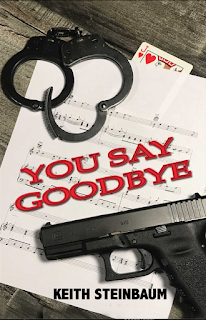
After a temperamental meltdown on stage, Sean Hightower, a regretful and resentful “one-hit wonder” rock musician hoping for a comeback, returns to his girlfriend’s condo seeking comfort from the woman he loves. But after letting himself in, he discovers her naked body on the bed, murdered from a bullet to the head. When the police detective arrives and sees the two taped pieces of paper on the wall with the word, “hello,” on one and “goodbye,” on the other, he realizes that the renowned serial killer, The Beatles Song Murderer, has struck again. In the days that follow, he reaches another conclusion—the Beatles Song Murderer is probably somebody Sean knows. Now the detective needs Sean’s help to find the killer.


Black Opal Books          Amazon          Barnes & Noble

iBooks          Smashwords          Kobo          Scribd


About Keith:

     After graduating college from UCSB, I set my sights on becoming a professional song lyricist after many years of writing poetry. Had I known through the haze of my naiveté and post college optimism what a difficult task this was to accomplish as a career goal, I would have focused on my other alternative of disc jockeying somewhere. I spent a couple years doing middle of the night work at the college station playing rock ‘n roll for those few listeners either partying or working night shifts, and I had about a hundred resume cassette tapes ready to send. I’ve occasionally wondered where this would have led me had I decided on this course for my career, but as it turns out, although I did have song on a popular album in America, and other songs recorded in a number of foreign markets, I wasn’t able to make a living as a lyricist and moved on into the field of landscape. But my creative writing flame continued to burn. Understanding that idea took time to realize through initial bouts of unhappiness lasting several years. But once I started focusing on poetry again, that’s where I rediscovered the untethered freedom and joy of writing without monetary goals.
     Fast forward to an eventual desire to write a novel, culminating in the completion of The Poe Consequence. As a buildup to the idea for the book, my landscape job entailed years of working in many low-income housing projects throughout Southern California, and, consequently, many neighborhoods with gang problems. This experience played a major role in formulating the concept for my story. Originally self-published, this past June I signed a contract with Black Opal Books for it’s re-release next summer. In the future I’d like the opportunity to delve further into all the ingredients that factored into the creation of the book but I’m certainly gratified for receiving valued blogger reviews on sites such as Amazon and Goodreads, as well as other accolades.
     Winner of Books-and-Authors.net’s Book of the Year in the Supernatural Thriller genre, the novel also made the 2015 Kirkus Reviews Books of the Year issue. And in 2017, it received a Finalist placing in the international Book Excellence Awards competition.
     My second novel entitled, You Say Goodbye, a Beatles themed whodunit murder mystery revolving around the search for a renowned serial killer, is my first with Black Opal Books. The story prominently features a one-hit wonder ex-rock star and a little girl with cancer who's a big fan of the L.A. Lakers. The child's character was inspired by the life, and unfortunate death, of Alexandra Scott from the Alex's Lemonade foundation.

     I can be found online at: Facebook     Goodreads.com        Twitter

     Here are my personal website links: KeithSteinbaum.com and ThePoeConsequence.com

Thursday, February 21, 2019 | By: The Write Way Cafe

Food for Thought with Nancy DeRosa

The Write Way Café welcomes Nancy DeRosa, who truly writes what she knows about food and how it brings people together.

When did you first have the thought you'd like to write a book? 
I have wanted to write books since I was eight years old. It just took me a while to actually sit down and do it! Lol!

What was your path to getting your women’s fiction series, Food for Thought, written and published? What type of research did you do? 
My Food-centric Series; Food for Thought; First Course, Second Course, and Just Desserts, published by Black Opal Books, started out as a short story, published by Lines in The Sand, a small literary journal out in California. The editor asked me what happens next? The concept, or should I say challenge to write my series sprang forth from that question. It’s amazing how that editor had inspired me. It leads me to believe the series had always been a part of me just waiting to be developed.

Where did the idea for Food for Thought come from? 
My idea for Food for Thought came from every-day experiences we all go through in our busy lives. Love, friendship, family struggles, career choices; “Slices of Life”, as I like to call it is what I write about in The Food for Thought Series. I wanted to make this work relatable to everyone, all told with the backdrop of delicious food. Food becomes the prop as social interactions take place. If there is a family fight at the dinner table, the chicken loses it glisten and the spinach wilts. Most of our social interactions take place around a table, whether it be having a cocktail, lunch, or a four- course dinner. I bring you into the restaurants, the diners, outdoor picnics, and family dinners. The scenes and drama unfold while my characters share a meal. I also describe the meals my characters eat. Food is always a part of my story line.

Tell us about the books in the series. 
The series celebrates life and how my characters all strive to progress as they navigate through conflicts. I love to cook, entertain, and I love spending times with friends and family. They say write about what you know and that’s exactly what I did! First Course, Second Course, and Just Desserts are drawn from real life experiences, the characters are fictional, but some of my characters are composites of me and many people I have met along the way. Many of the scenes unfold around the dinner table and I take you into each restaurant, diner, or family meal. What happens at the dinner table laden with delicious food is what I write about.

Why did you pick the setting you did?
That question is easy! I live in New York so once again, I wrote about what I know and where I’ve gone out to eat. The first restaurant my main character, Emma Craven, dines in with her friends in the series, is based on one of my favorite restaurants; Rubys Oyster Bar in Rye, NY. The grill pit I write about where Emma first sets eyes on her love interest, chef, Gary Parker, in the restaurant, Murry’s Grill, is loosely based on the grill pit in Ruby’s. That’s the setting I imagined for Murry’s Grill.

Are your main characters completely imaginary or do they have some basis in real people? Do they reflect aspects of yourself? 
Yes, as I had said earlier in this interview, I draw from real life experiences as well as from fiction to create The Food for Thought Series. The food aspect is very much drawn from me though, I love to cook and dine out and the characters are often drawn from some of my own relationships and people I have met throughout my life. My secondary characters are well developed to realistically depict the many complications that can arise in all relationships, whether it be friendships, family connections, or a love interest. Many readers will see an aspect of themselves, or a situation they can relate to in my series. Relationships are always changing, there are always challenges, an ebb and flow. I try to reflect that in my writing.

Did you face any blocks while writing your series, and if so, how did you handle them? 
The story just flowed, but I found the editing and tightening of my work the most challenging. To make the characters jump out and resonate with my readers was what I spent the most time on perfecting to make them real and multi-dimensional. To create dialogue that is true to life and characters relatable to my readers was the most difficult piece of this series and the most important to me. I want readers to connect to my characters and say; yes, that happened to me, or, I have felt the same exact way! That was how I approached this series on the onset. I really wanted to strike a chord with my audience while they sat at the table with my characters.

What have been surprises you've encountered while writing your Food for Thought series and after? 
When I knew my work was going to be published that was the happiest surprise. I have a cooking/lifestyle show premiering very soon on Footprinttv, a streaming channel, produced by Starbaby Enterprises, based on my Food-centric series. In Food for Thought; The Series with author Nancy Dee, I cook some of my favorite meals to share with others and I will be having guests on to share their favorite recipe, or food product, along with the story behind it. I will also cook meals that I describe in The Food for Thought Series. This is the most exciting and surprising development thus far and I am very excited about it!

What did you learn? For instance, what did you learn about yourself, your process, the writing world; about restaurants, chefs, and relationships people have with food? 
My main character has issues with food and a poor body image. I write about her struggles and how she learns to love herself and enjoy the food she eats without guilt. I hope her journey and struggles will connect with my readers as women can be so hard on themselves and I wanted to write about that in my series. I have also learned that everyone enjoys a good meal, shared with family, and good friends. Food feeds the soul, connects us all. It is the thread that binds us. We all have coming together for a meal in common. It’s universal and I have found that it doesn’t matter to people where you go to share that meal. It’s really who you are sharing it with that brings the most joy.

Tell us about your other food-related endeavors. 
I am so excited about my new cooking show premiering on Footprinttv. That will be the first place it will debut, we are developing this show for other outlets as well. I want to share delicious meals and recipes drawn from my books as well as from family favorites. I will also have guests on Food for Thought; The Series to share their favorite dish, or food related product as we share the story behind it with our viewers. Every meal has history, a story or memory behind it. I will be exploring that theme in my show. It is so special for me to share a recipe with others who will, hopefully, make it a staple in their home. To share a meal, or recipe, and have it become a part of another’s thread of their tapestry is wonderful and what I am aiming for!! I want to share dinner with as many people as I can! What can be better than that? One of my favorite recipes I cook on my show is my grandmother’s chicken and rice. She had brought it over to America from Portugal when she was very young and had cooked it for her family, passing it down for generations. It’s delicious, healthy, and relevant today. I can’t wait to hear from my viewers to see who made it in their kitchen!

Tell us about your writing space and how or why it works for you. 
I sit in my sunroom with my dog named Freddy. It has windows on everywhere and I love to look out at my red maple tree.

What are some of your favorite books and why? 
There are so many books that I love, I couldn’t possibly name them all, but a few come to mind; Charlottes Web by Stuart Little, when I was young it had such an impact on me, A Tree Grows in Brooklyn, A Christmas Carol. It amazes me how relevant that book is today, along with Pride and Prejudice by Jane Austin, which also stands the test of time. Kite Runner, and Sarah’s Keys has stayed with me and The Shining by Stephen King had my heart pounding the entire time I had read it which makes it an unforgettable read for me.

What are you working on now? 
I am working on Not My Fault, which deals with children as they navigate through their parents devastating divorce written from their perspective. I am also beginning to work on After Dinner Drinks, the fourth installment of the Food for Thought Series.

Would you like to try your hand at writing a different genre? Which one and why? 
I would love to attempt a screenplay. I will be exploring options for Food for Thought, The Series for a television series, or movie. I believe Food for Thought would be perfect for this medium as it’s fast paced, scene, and dialogue driven. It wouldn’t be difficult to turn it into a screen play. I will be exploring that at some point. There are many ways I would like to springboard off from this series.

If you were not a writer, what would your real job be? 
A teacher, preferably with small children.

What aspect of writing gives you the most trouble? 
Making my characters real and relatable. That’s the most difficult aspect of writing for me as well as developing believable dialogue, making my characters come to life. That can be painstaking. Writing is a craft I am always learning from and it’s a process I will always strive to be better at.


In Just Desserts we find Emma Craven's life has become more complicated and difficult to navigate. She's student teaching and working at her husband Gary Parker's restaurant; The Green Spruce Grill. An unexpected pregnancy has Emma's head whirling, and she can't keep up with all the responsibilities she now has in her life. She begins to resent Gary, as his life won't change, while Emma fears she will have to shelve teaching for the time being because she's about to become a mother. Her relationship with Gary's family begins to unravel even further and, for the first time, Emma, takes some responsibility for the problems and misunderstandings she has with others.


Black Opal Books
Smashwords
Kobo
Barnes & Noble
Amazon


Nancy DeRosa is a resident of Westchester County, NY. She graduated from SUNY Purchase, NY, with a Bachelor of Arts. Nancy is an actress and published writer of a children’s book; “Lazy Robert” which had been featured in Teacher’s media magazine and women’s fiction; “There’s No Place Like Home, A Penny’s Worth, and Food for Thought; The Series.” Food for Thought; First Course and Second Course is available wherever books are sold. The third installment of The Food for Thought series; “Just Desserts” is due out later this year. Currently, Nancy is working on the fourth installment of Food for Thought; “After Dinner Drinks.”

Among some of the films Nancy has been involved with; she had worked with Chip Hourihan in a supporting role, (director of Frozen River) on his short film; “Twist.” The short film “In Parallel,” in which Nancy had a supporting role, had been accepted and premiered in the Short Film Festival in Canne, 2016. Her feature film; “Home by Now” which she had a supporting role, is now available on Amazon.

Currently, Nancy is rehearsing for the play; “Roundelay” which she has a supporting role. Roundelay will premiere at the White Plains Performing Arts Center, NY, February 25th, 2017.

Nancy had been a member of Actor’s Project NY and has appeared on The Food Network’s “Food Detectives.” Her Food-Centric Series Food for Thought, a cooking and lifestyle show loosely based on her women’s fiction; Food for Thought the Series, will be premiering soon, produced by Starbaby Enterprises. It will debut on Foodytv, and Footprinttv. Nancy is busy working on the fourth installment of The Food for Thought Series; “After Dinner Drinks”, and she is also currently working on a novel about how children deal with a devastating divorce in their family, titled; “Not My Fault.”

Contact Nancy at: fftnancy@aol.com


www.derosabooks.com          www.facebook.com/DeRosaBooks.


Thursday, January 17, 2019 | By: The Write Way Cafe

Confessions of a Pantser by Sandra Gardner

Today at The Write Way Cafe author Sandra Garner enlightens us on the ins and outs of pantser versus plotter.


I’m a proud pantser. As you might guess, a pantser is a person who writes by the seat of his or her pants. More or less.

That’s versus a plotter, a term that usually refers to someone who carefully plots, using tools such as an outline of what’s to come. Or what should be to come.

There’s the problem with being too much of one or the other. Too much plotting can mean the characters aren’t fleshed out enough. Too much pantsing can make your mystery go off the rails. Most writers have to use elements of both. For me, going over to the, um, other side – plotting – happens when I get desperate. When I’m mumbling to the people populating my head, this book isn’t going anywhere, guys. We need help!

Sometimes, I feel as if I don’t have much to do with what my characters do and say. They just appear inside my head and start doing things. Often I don’t know where they’re going or what they’ll be doing next. When they talk to me. I let them go on and on, telling me what’s happening (external dialogue), what they’re thinking (internal dialogue), what they’re planning on doing (action), what they’re afraid of (tension). I’m their scribe, there to listen and take all the notes I can scribble. And then try to make sense out of it all.

That’s all well and good. But … much as I loathe outlines, at some point, I have to bite the bullet. Because though I love listening to my characters, getting to know them, letting them have relationships, getting themselves in trouble, fighting off those who mean them harm – sometimes landing them in near-death experiences but managing to get themselves out of them – eventually, I realize that I don’t know where all this is going, how it’s going to get where it needs to get, and what I need to do to make it work to a satisfying end. Somehow, I have to balance keeping the characters talking, walking and acting, moving the story along and making it all work. In other words, I need … an outline.

Here’s an example from my Mother-and-Me Mystery Series.

My main character, MC (protagonist) Marabella, and her recently deceased mother (sidekick) – the bane of her existence in life -- popped into my head and wouldn’t leave (see description of the ghost-mother-detective later). That happened in Dead Shrinks Don’t Talk, book 1 in the Mother-and-Me Mysteries.

In Grave Expectations, book 2, the annoyingly helpful ghost mother reappears, warning about imminent danger to Marabella’s favorite neighbor, Sam. Sam becomes the first victim of an unknown killer. Mixed in were a bunch of possible suspects (greedy relatives, heir to the first victim’s considerable estate). There’s a second victim (Rose, another elderly neighbor and Sam’s friend), and then a third victim. Marabella tries to enlist the help of the NYPD. Unfortunately for her, her bête noir from book 1, Detective Eddie Rivera, now a lieutenant, doesn’t believe there was a murder and as usual, doesn’t take Marabella’s instincts seriously.

Though you need strong, believable characterization in a mystery – as in any fiction – you need a strong, believable story for the characters to inhabit. Which involves (sigh) plotting.

So, a plot outline becomes necessary. I’ve tried it several ways. One way is writing down scenes in numerical order. Here’s what I did in Grave Expectations:

     1.  Marabella’s (main character, amateur detective) elderly neighbor Sam (victim) is found dead. She and her mother-the-ghost-detective (sidekick) think it could be murder. Marabella calls cops and, as the executor of Sam’s will, notifies his greedy relatives and heirs (suspects).

      2.  Rose, another elderly neighbor and friend of Sam’s, is frightened, because she caught a glimpse of someone (possibly the killer) running out of Sam’s apartment. She’s afraid the person saw her.

     3.  Sam’s fancy funeral, staged by materialistic relatives. Rose isn’t there. Marabella finds her in the laundry floor, seriously injured by an attacker (second victim).

Woven into the story (and the outline) is the not-so-loving relationship between Marabella and her irritating ghost-mother. Making things worse in the relationship is the curmudgeonly cat Marabella acquired as a tiny kitten, who’s grown into Catzilla. Her mother and the cat hate each other on sight.

Into the outline go Toniann (best friend), a good listener who often just doesn’t get it. Her problem is her upcoming wedding and soon-to-be interfering mother-in-law (subplot). Marabella’s job is writing in a college PR department in New York City. (setting) In a big city, it’s easier to manufacture dangerous situations. The college is where Marabella met her hunky boyfriend, John, a vet who runs the veterinarian technician program. But his new assistant is a flirty, sexy woman whom every woman at the college, including Marabella, is ready to kill – or at least, do her harm. (subplot) Another problem in Marabella and John’s relationship is that his pets are three large St. Bernard brothers. Marabella hasn’t told him that she’s terrified of creatures larger than a breadbox, with too many legs or no legs. Even worse, she hasn’t told him about her ghostly roommate, whom no one can see or hear except Marabella and her cat ….

To make the story work, the dreaded outline includes these relationships, what’s happening with them, how they related to our M.C., how are they moving the story along, and often leading to a subplot or two. Oh, and of course, everything leads to a climax and we find out whodunit.

Now you know why and how this proud pantser uses an outline to save her mystery novel.


by Sandra Gardner

When Marabella’s favorite neighbor, Sam, dies, everyone -- including the NYPD – thinks it was natural causes. After all, Sam was pushing 80, with a heart condition. But Marabella knows his heart problem was mild and under control with medication. And she’s already acquainted with Sam’s greedy relatives, so she doesn’t think there’s anything natural about it. Neither does her sleuthing sidekick, her mother-the-ghost-detective, who recently dropped back into Marabella’s life, happy to interfere again. Marabella and her mother vow to track down the killer by investigating the heirs to Sam’s considerable estate. Can she and her mother find the killer before the killer finds her?

More information about Sandra Gardner and her books is available on her Website

Grave Expectations, book 2 in the Mother-and-Me Mystery Series, was published by Black Opal Books in December, 2018.

Print and e-reader copies are available from:

Amazon           Barnes and Noble         Kobo             Black Opal Books