Tuesday, November 27, 2018 | By: HiDee

Spend More Time Living in the Moment

Thanksgiving has come and gone, and although it is not yet December, the Christmas season is upon us. Ready or not.

I’m not…

I’m not ready for the cold or the snow. Many of you will disagree with me, but if I had my way, we would have 1-2 inches of snow a couple days before Christmas, and it would all be gone by a couple days after Christmas. The only part I love about snow is being able to go walking in it, at dusk, when it’s coming down fresh and clean. It’s so peaceful and pretty in that moment. But then I’m happy if it disappears.

I’m not looking forward to fighting the people and the lines in the stores. I put too much pressure on myself to find the perfect gifts for my family and friends. My husband goes into a store with a list, and it’s like magic – everything he wants is right there. Check. Check. Check. I go into a store with a list and it’s anything but magic – you wanted what? Hahahahaha!!!

Well, bah humbug!

Sometimes I just have to step away from the holiday stress. I find peace when I morph into my alter ego, Lainee Cole, and spend time writing and playing with the shelter dogs in my stories. I recently heard a discussion about how to be as happy as your dog, and I thought it was fitting.

Dogs live in the moment. They don’t worry about what happened 10 minutes ago, or what might happen in the coming hours. They run and play, and yes, probably enjoy the snow I dislike. When they’re tired, they take a nap.

Dogs ask for what they need. They stick their nose in your face or lay on your lap. "Pet me," their soulful eyes beg. They sneak under the table and gently lay their heads on your thigh, hoping you’ll slip them just a bite of something good.

Dogs set boundaries. A low growl lets you know if you get too close, or if you are doing something that makes them uncomfortable. They don’t feel bad about putting us humans in our place. At least I don’t think they do…

Dogs are good at using their senses. They hear a noise and they investigate. They see a squirrel and want to chase it. We once had a dog who knew the minute someone got ice cream out of the freezer, even if the words "ice cream" were never spoken aloud. Dogs smell food and are ever hopeful that we will share.

We could learn a lot about how to be happy from our dogs. All of these things – using our senses, setting boundaries, asking for what we need – they all come back to living in the moment.

That’s my goal for this Christmas season – to spend more time living in the moment.

I want to focus on enjoying where I am and who I am with. I want to set boundaries on my time, to not feel guilty about turning down invitations if they don’t fit my schedule. I want to inhale the scent of my fresh-cut white pine Christmas tree, and transport my mind back to our vacation under the pine trees in South Dakota, where we got away from it all. When the cold and snow arrive, I want to listen to the wind rustle the branches of trees. I want to close my eyes and soak up any sunshine that comes my way while I take deep, cleansing breaths of fresh, cold air.

And once I’ve had my fill of the cold (which won’t take long), I will curl up in front of a roaring fire with a good book, and live in the moment of that world.

What are some ways you plan to live in the moment this holiday season? 

Captured by Christmas - Authors Lynn Crandall and Lainee Cole


HiDee Ekstrom never goes anywhere without a book or a pen and paper. Reading, writing, and chocolate are important elements of her daily life that inspire her to write. She also finds inspiration in and enjoys photography, scrapbooking, camping, hiking, and spending time with her family. Writing as Lainee Cole, two of her short-stories have been self-published in anthologies: Captured by Christmas and At Midnight. Follow Lainee at Facebook Author Page, Facebook Author Profile Page, and on Twitter.


Friday, November 23, 2018 | By: The Write Way Cafe
Don't be pushed around by the fears in your mind. Be led by the dreams in your heart.
- Roy T. Bennett, The Light in the Heart
Thursday, November 22, 2018 | By: The Write Way Cafe
Tuesday, November 20, 2018 | By: The Write Way Cafe

Tuesday Special: Nice to Come Home To by Liz Flaherty

LIZ FLAHERTY


by Liz FlahertyWill an apple a day…

Keep love at bay?

For Cass Gentry, coming home to Lake Miniagua, teenage half sister in tow, is bittersweet. But her half of the orchard she inherited awaits, and so does a fresh face—Luke Rossiter, her new business partner. Even though they butt heads in business, they share one key piece of common ground: refusing to ever fall in love again. But as their lives get bigger, that stance doesn’t feel like enough…


Amazon        B&N        iTunes

Kobo        Google Books


Liz Flaherty spent way too much time when she was young worrying about growing old. Regardless of how much hair color and moisturizer she used, it happened anyway. Now that she really IS old, she only worries that it won't last long enough--it's a lot more fun than she anticipated. She still loves adventures with Duane, her husband of 47 years, and she's not even going to get started on the grandkids--there are seven, by the way, all perfect... She writes and makes quilts and spends time with friends and family and never dusts. It's all good.


Website        Facebook        Twitter


Friday, November 16, 2018 | By: The Write Way Cafe
If the book is true, it will find an audience that is meant to read it.
- Wally Lamb
Thursday, November 15, 2018 | By: The Write Way Cafe

Meet Howard Levine

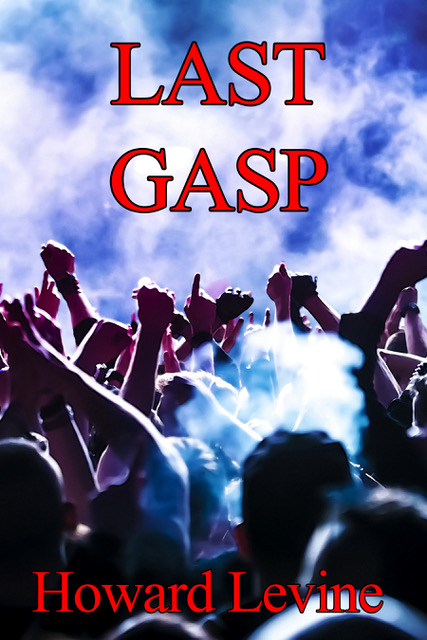
The Write Way Cafe welcomes Howard Levine, author of Last Gasp, a timely, topical thriller.


When did you first have the thought you'd like to write a book?
I’ve been interested in writing fiction since college, when I wrote my first respectable short story, according to my professor at the time. I wanted to write a novel as a vehicle for the expression of certain understandings about life that resulted from my involvement with Transcendental Meditation.

What was your path to getting Last Gasp written and published? What type of research did you do?
A significant part of the backstory in Last Gasp involves the Vietnam War. A People’s History of the Vietnam War, by Jonathan Neale, was very helpful with my depiction of the war. I consulted various individuals with specialized knowledge—of air conditioning/heating and medical issues, to name a couple—over the course of writing the novel. Last Gasp was partially rewritten a few times, the last at the behest of my agent, who felt that some of the backstory should be cut: thrillers need to move forward. I think the novel definitely does now. My agent placed Last Gasp with Black Opal Books, an indie press that I feel has done a fine job with the novel.

Where did the idea for Last Gasp come from?

The idea came from the duplicity of right-wing US governments, combined with their hostility toward immigrants and Muslims.

Why did you pick the setting you did?
The Bronx and environs are familiar to me, so I felt that I could depict the settings accurately. Also, as indicated in the text, the area in which the terrorist attack (which is central to the plot) occurs is densely populated, which, regrettably, makes it a desirable target for terrorists.

Are your main characters completely imaginary or do they have some basis in real people? Do they reflect aspects of yourself?
While the main characters—two brothers--are not based on anyone I know, I think that they are very real in terms of their life experiences, their relationship, their personalities, and their reactions to the traumas that they undergo. They probably reflect aspects of myself—such as speech patterns-- in that I’m an ex-New Yorker.

Did you face any blocks while writing Last Gasp, and if so, how did you handle them? If not, what's your secret?
I don’t think I faced any serious blocks, and there’s no secret involved that I can point to. If I was stuck at a particular point, I naturally tended to think more about the novel when I wasn’t actually writing, which usually resulted in solutions presenting themselves. Also, I think that the regular practice of Transcendental Meditation enhances creativity.

What have been surprises you've encountered while writing Last Gasp and after?

I’ve been surprised at the way twists and turns of the plot seemed to spontaneously present themselves. After finishing the novel, I was surprised that I’d written a “thriller,” since everything else that I’ve written would not fall in that category.

What did you learn? For instance, what did you learn about yourself, your process, the writing world; about NYPD detectives, government, and terrorists?

I learned that writing about situations that I can relate to directly—I’ve experienced the loss of family members who died young, for instance—causes me to become totally involved in what I’m writing. The gap between myself and the material becomes non-existent. I’ve also learned, and readers have said as much, that the scenario in my novel is not all that far-fetched. The last two Republican presidents, and their enablers in congress, have demonstrated a willingness to do pretty much anything in order to maintain their power—start a war based on lies, do nothing about the yearly toll of death and injury via guns in this country so that the NRA and the gun industry will continue to fill Republican coffers, on and on.

Tell us about your writing space and how or why it works for you.
I write at a well-worn desk in my bedroom. It works because it’s comfortable enough and I can reach my computer—the only requirements for any space in which I might write. Usually I’m writing at the desk, but I can write anywhere, preferably indoors.

What are some of your favorite books and why?

Poisonwood Bible by Barbara Kingsolver, was deeply affecting, with a plot that built to a climax. Jennifer Egan’s One for the Goon Squad was both imaginative and gripping. Ditto for Hiruki Murakami’s 1Q84, which is the longest novel I can recall reading.

What are you working on now?

I’m working on a novel in which a retired couple rescues two undocumented minors from the desert in Arizona. They take it upon themselves to attempt to reunite the boys with their father in Maryland, circumventing the law in the process. I’m not working on it as regularly as I’d like, because promoting Last Gasp takes up a lot of my time.

Would you like to try your hand at writing a different genre? Which one and why?

As I mentioned previously, Last Gasp is the only novel I’ve written that fits into the category of “thriller.” My first published novel, entitled Leaving This Life Behind, could be called a family drama with spiritual overtones. Basically, I find a central idea for a novel and work from there. I have no genre in mind beforehand—that was true with Last Gasp.

If you were not a writer, what would your dream job be?

I can’t say that writing is my “job,” since I haven’t come close to making a living at it. I can’t really think of a dream job; I’m a retired teacher of special education and English for Speakers of Other Languages, and that suits me well.

What aspect of writing gives you the most trouble?
Facial descriptions are one area in which I’d like to improve. A related issue is finding different ways to indicate that someone is amused, or expressing amusement, and to what degree.

by Howard Levine
Frank Tedeschi’s niece is dead, one of thousands of victims of a terrorist attack, which has been laid at the feet of “Islamic radicals” by a right-wing US government.  Frank, based on a chance encounter, is one of the very few people who question the government’s explanation.  He is a Vietnam veteran who wants nothing more than to live without further controversy or conflict.  Can he and his grieving brother Rob, a detective with the NYPD, obtain the necessary evidence to uncover the truth, in the face of scorn and incredulity?  Can they overcome their long-term estrangement to work together, given that they are putting their lives in danger?

In LAST GASP—a novel that resonates with today’s politics—the answers to these questions unfold in a way that mingles personal and societal issues and intertwines the past and present while moving relentlessly forward.

Amazon


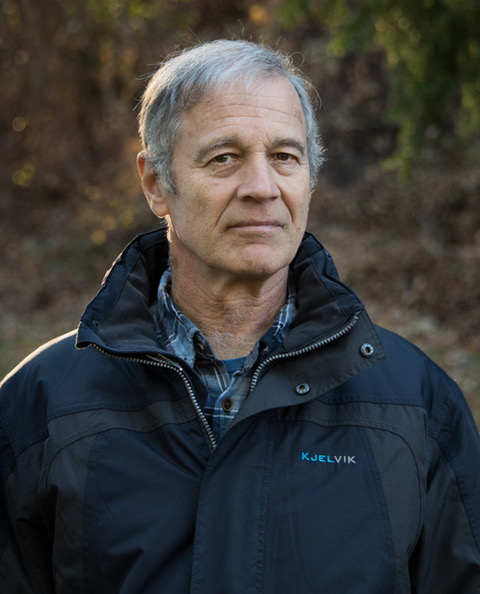
Howard Levine is the author of one previously published novel, Leaving This Life Behind.  A former teacher of special education and English as a second language in public schools, he lives in suburban Washington DC, where he hikes, bikes, writes and volunteers at a soup kitchen.